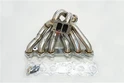
Turbo lag is a common concern among automotive enthusiasts, especially those with turbocharged engines like the N20. As a supplier of N20 intercoolers, I often get asked whether our intercoolers can reduce turbo lag. In this blog, we'll delve into the science behind turbo lag, how intercoolers work, and whether the N20 intercooler can indeed make a difference.
Understanding Turbo Lag
Turbo lag refers to the delay between the moment you press the accelerator pedal and the moment the turbocharger spools up to deliver the desired boost. This delay occurs because the turbocharger needs time to spin up to its optimal speed. When you step on the gas, the engine's exhaust gases start to flow through the turbine of the turbocharger. The turbine then spins, which in turn drives the compressor, forcing more air into the engine. However, this process takes a bit of time, resulting in a noticeable delay in power delivery.
Several factors contribute to turbo lag. The size of the turbocharger plays a significant role. Larger turbochargers can provide more boost, but they also take longer to spool up. The engine's exhaust flow rate is another factor. If the exhaust flow is insufficient, the turbocharger won't spin up as quickly. Additionally, the design of the intake and exhaust systems can affect turbo lag. Restrictive intake or exhaust systems can slow down the flow of air and exhaust gases, increasing the lag.
How Intercoolers Work
Before we discuss whether the N20 intercooler can reduce turbo lag, let's understand how intercoolers work. An intercooler is a heat exchanger that cools the compressed air coming from the turbocharger before it enters the engine. When the turbocharger compresses the air, it heats it up. Hot air is less dense than cold air, which means there are fewer oxygen molecules in a given volume of hot air. By cooling the compressed air, the intercooler increases its density, allowing more oxygen to enter the engine.
More oxygen in the engine means more fuel can be burned, resulting in increased power output. Additionally, cooler air is less prone to detonation, which is an uncontrolled explosion of the air-fuel mixture in the engine. Detonation can cause engine damage and reduce performance. Therefore, an intercooler not only increases power but also improves engine reliability.
Can the N20 Intercooler Reduce Turbo Lag?
Now, let's address the question at hand: Can the N20 intercooler reduce turbo lag? The answer is a bit complex. While an intercooler itself doesn't directly reduce turbo lag, it can have an indirect effect on it.
As mentioned earlier, an intercooler increases the density of the air entering the engine. This means that for a given amount of boost, the engine can produce more power. When the engine can produce more power more quickly, it can overcome the inertia of the turbocharger more effectively, allowing it to spool up faster. In other words, the increased power output from the intercooler can help the turbocharger reach its optimal speed more rapidly, reducing the perceived turbo lag.
However, it's important to note that the reduction in turbo lag is not solely due to the intercooler. Other factors, such as the turbocharger size, exhaust flow rate, and intake system design, also play a crucial role. An intercooler is just one piece of the puzzle.


Our N20 Intercooler
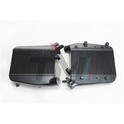
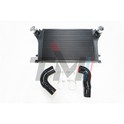
At our company, we offer a high-quality N20 intercooler that is designed to maximize performance. Our intercooler features a large core size and a high-efficiency design, which allows it to cool the compressed air effectively. The increased air density results in more power and improved throttle response.
In addition to its performance benefits, our N20 intercooler is also built to last. It is made from high-quality materials that can withstand the rigors of daily driving and high-performance applications. The intercooler is also easy to install, with a direct-fit design that requires no modifications to the vehicle.
Complementary Products
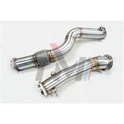
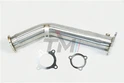
While our N20 intercooler can have a positive impact on turbo lag and overall performance, it can be further enhanced by combining it with other performance products. For example, upgrading to a high-performance downpipe can significantly improve exhaust flow, which in turn can reduce turbo lag. We offer a range of downpipes, including the N54 Downpipe and F95 X5M S68 Downpipes, which are designed to optimize exhaust flow and increase power.
Another complementary product is the Carbon Fiber Tips. These tips not only add a stylish look to your vehicle but also improve exhaust flow and sound. The carbon fiber material is lightweight and durable, making it an excellent choice for performance enthusiasts.
Contact Us for Purchase and Consultation
If you're interested in reducing turbo lag and improving the performance of your N20 engine, our N20 intercooler and complementary products are the perfect solution. We have a team of experts who can provide you with detailed information and guidance on the best products for your specific needs.
Whether you're a professional racer or a weekend enthusiast, we can help you achieve the performance you desire. Contact us today to start the conversation about purchasing our products and taking your vehicle's performance to the next level.
References
- Heywood, J. B. (1988). Internal Combustion Engine Fundamentals. McGraw-Hill.
- Crolla, D. A. (2001). Vehicle Dynamics: Theory and Application. Society of Automotive Engineers.
- Stone, R. (1999). Introduction to Internal Combustion Engines. Butterworth-Heinemann.