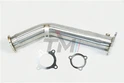
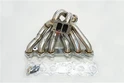
Does a Charge Pipe Affect Fuel Efficiency?
As a charge pipe supplier, I often get asked about the impact of charge pipes on fuel efficiency. It's a valid question, especially for car enthusiasts and everyday drivers alike who are looking to optimize their vehicle's performance and save on fuel costs. In this blog post, I'll delve into the science behind charge pipes and explore whether they can have a positive or negative effect on fuel efficiency.
Understanding Charge Pipes
Before we discuss the relationship between charge pipes and fuel efficiency, let's first understand what a charge pipe is and what it does. A charge pipe is a crucial component in a turbocharged or supercharged engine. Its primary function is to carry compressed air from the turbocharger or supercharger to the intake manifold. This compressed air is denser and contains more oxygen, which allows for a more efficient combustion process in the engine cylinders.
Charge pipes are typically made from various materials, including aluminum, steel, and titanium. Each material has its own advantages and disadvantages in terms of durability, weight, and heat resistance. For example, aluminum charge pipes are lightweight and offer good heat dissipation, while steel charge pipes are more durable and can withstand higher pressures. Titanium charge pipes, on the other hand, are known for their high strength-to-weight ratio and corrosion resistance. You can explore our Titanium Charge Pipe for more information.
How Charge Pipes Can Affect Fuel Efficiency
Now, let's get to the main question: does a charge pipe affect fuel efficiency? The answer is not straightforward, as it depends on several factors. Here are some ways in which charge pipes can potentially impact fuel efficiency:
1. Improved Airflow
One of the primary benefits of upgrading to a high-quality charge pipe is improved airflow. A well-designed charge pipe with smooth inner walls and optimized bends can reduce air turbulence and restrictions, allowing the compressed air to flow more freely into the engine. This improved airflow can lead to better combustion efficiency, as the engine can intake more air and fuel mixture, resulting in more power output per unit of fuel consumed. In some cases, this can translate to better fuel efficiency, especially during highway driving or when the engine is operating under light to moderate loads.
2. Reduced Boost Pressure Loss
Another advantage of a good charge pipe is its ability to minimize boost pressure loss. When the charge pipe has leaks or restrictions, it can cause a drop in boost pressure, which means the engine has to work harder to maintain the desired level of performance. This can lead to increased fuel consumption as the engine compensates for the loss of power. By ensuring a tight and efficient connection between the turbocharger or supercharger and the intake manifold, a high-quality charge pipe can help maintain consistent boost pressure, reducing the need for the engine to burn more fuel to achieve the same level of performance.
3. Heat Management
Charge pipes can also play a role in heat management, which can indirectly affect fuel efficiency. Compressed air from the turbocharger or supercharger can become very hot, and if this hot air is not cooled down before entering the engine, it can cause a decrease in air density and a reduction in combustion efficiency. Many charge pipes are designed to work in conjunction with intercoolers, which cool the compressed air before it enters the engine. By effectively managing the temperature of the intake air, a charge pipe can help maintain optimal air density and combustion efficiency, potentially leading to better fuel economy.


4. Engine Tuning
It's important to note that the impact of a charge pipe on fuel efficiency can also be influenced by the engine's tuning. When you install a new charge pipe, it may be necessary to adjust the engine's fuel mapping and ignition timing to optimize the performance and fuel efficiency. A professional engine tuning can ensure that the engine is running at its best with the new charge pipe, taking into account factors such as airflow, boost pressure, and air temperature. Without proper tuning, the engine may not be able to fully utilize the benefits of the charge pipe, and fuel efficiency may not improve as expected.
Factors That Can Limit the Impact on Fuel Efficiency
While charge pipes have the potential to improve fuel efficiency, there are also some factors that can limit their effectiveness. Here are a few things to consider:
1. Driving Style
Your driving style plays a significant role in fuel efficiency. Even with a high-performance charge pipe, if you drive aggressively, with frequent hard acceleration and braking, you're likely to consume more fuel regardless of the improvements made to the engine's airflow and combustion efficiency. To maximize the benefits of a charge pipe, it's important to adopt a more fuel-efficient driving style, such as maintaining a steady speed, avoiding rapid acceleration and deceleration, and using cruise control on the highway.
2. Vehicle Condition
The overall condition of your vehicle can also affect fuel efficiency. If your engine is in poor condition, with worn-out components or a dirty air filter, it may not be able to perform at its best, even with a new charge pipe. Regular maintenance, including oil changes, air filter replacements, and spark plug inspections, is essential to ensure that your vehicle is running efficiently and that the charge pipe can have the greatest impact on fuel economy.
3. Other Modifications
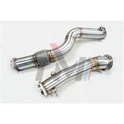
If you've made other modifications to your vehicle, such as installing a Stainless Steel Cat Back Exhaust System or a B48 Downpipe, these can also interact with the charge pipe and affect fuel efficiency. It's important to consider the overall system and how all the components work together. In some cases, additional modifications may require further engine tuning to achieve the best balance between performance and fuel economy.
Conclusion
In conclusion, a charge pipe can potentially have a positive impact on fuel efficiency, but the extent of this impact depends on several factors. By improving airflow, reducing boost pressure loss, managing heat, and working in conjunction with proper engine tuning, a high-quality charge pipe can help optimize the engine's performance and combustion efficiency, leading to better fuel economy. However, it's important to remember that driving style, vehicle condition, and other modifications also play a crucial role in determining the overall fuel efficiency of your vehicle.
If you're considering upgrading your charge pipe to improve fuel efficiency, I encourage you to do your research and consult with a professional mechanic or tuner. They can help you choose the right charge pipe for your vehicle and ensure that it's installed and tuned correctly. At our company, we offer a wide range of high-quality charge pipes made from different materials to suit your specific needs and preferences. If you have any questions or would like to discuss your options, please don't hesitate to reach out to us. We're here to help you make the best decision for your vehicle and achieve the optimal balance between performance and fuel efficiency.
References
- Bosch Automotive Handbook, 7th Edition
- Society of Automotive Engineers (SAE) Technical Papers
- Various automotive magazines and online resources