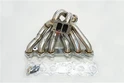
How can I tell if my charge pipe is leaking?
As a charge pipe supplier, I've encountered numerous customers who are often puzzled about whether their charge pipes are leaking. A leaking charge pipe can significantly impact the performance of your vehicle, leading to reduced power, increased fuel consumption, and potential engine damage. In this blog post, I'll share some common signs and methods to help you determine if your charge pipe is leaking.
1. Loss of Power
One of the most noticeable symptoms of a leaking charge pipe is a loss of power. The charge pipe is responsible for delivering compressed air from the turbocharger or supercharger to the engine. When there's a leak, the amount of air reaching the engine is reduced, resulting in a decrease in power output. You may notice that your vehicle accelerates more slowly than usual, especially when you step on the gas pedal. If you've been experiencing a gradual or sudden drop in performance, a leaking charge pipe could be the culprit.
2. Whistling or Hissing Sounds
Another tell - tale sign of a charge pipe leak is the presence of whistling or hissing sounds. When compressed air escapes through a leak in the charge pipe, it creates a high - pitched whistling or hissing noise. This sound is often most noticeable when the turbocharger or supercharger is under boost, such as during acceleration. If you hear such noises coming from your engine bay, it's a strong indication that there's a leak in the charge pipe.
3. Check Engine Light
The check engine light on your dashboard can also be an indicator of a charge pipe leak. Modern vehicles are equipped with sensors that monitor various aspects of the engine's performance, including the air intake system. A leaking charge pipe can disrupt the proper air - fuel mixture, causing the engine control unit (ECU) to detect an abnormal condition. When this happens, the check engine light may illuminate. However, it's important to note that the check engine light can be triggered by many other issues as well, so it's necessary to perform further diagnostics.
4. Visual Inspection
A visual inspection of the charge pipe is a simple yet effective way to check for leaks. Start by locating the charge pipe in your engine bay. It's usually a large, reinforced rubber or plastic pipe that connects the turbocharger or supercharger to the intake manifold. Look for any visible signs of damage, such as cracks, holes, or loose connections. Pay special attention to the areas where the charge pipe connects to other components, as these are common places for leaks to occur. You can also look for signs of oil or dirt around the charge pipe, which may indicate that compressed air has been escaping and carrying these substances with it.
5. Pressure Testing
If a visual inspection doesn't reveal any obvious signs of a leak, you can perform a pressure test. This involves using a pressure tester to apply pressure to the charge pipe and then monitoring the pressure to see if it drops over time. To perform a pressure test, you'll need a pressure tester kit, which can be purchased at most auto parts stores. First, disconnect the charge pipe from the turbocharger or supercharger and the intake manifold. Then, connect the pressure tester to one end of the charge pipe and seal the other end. Apply pressure to the charge pipe according to the manufacturer's instructions and monitor the pressure gauge. If the pressure drops rapidly, it indicates that there's a leak in the charge pipe.
6. Boost Pressure Monitoring
Monitoring the boost pressure is another way to detect a charge pipe leak. You can use a boost gauge to measure the amount of pressure in the charge pipe. A properly functioning charge pipe should maintain a consistent boost pressure under normal driving conditions. If you notice that the boost pressure is lower than normal or fluctuates erratically, it could be a sign of a leak. However, it's important to have a baseline reading of the normal boost pressure for your vehicle, as this can vary depending on the make, model, and engine specifications.
7. Smoke Testing
Smoke testing is a more advanced method for detecting charge pipe leaks. This involves introducing smoke into the charge pipe and looking for any signs of smoke escaping from the pipe. Smoke testing can help you identify even small leaks that may not be visible during a visual inspection. To perform a smoke test, you'll need a smoke machine, which can be rented or purchased. First, seal off the charge pipe from the turbocharger or supercharger and the intake manifold. Then, connect the smoke machine to the charge pipe and introduce smoke into the system. Look for any signs of smoke escaping from the charge pipe, such as around connections or through cracks.
Impact of Leaking Charge Pipes on Vehicle Performance
A leaking charge pipe can have a significant impact on your vehicle's performance. As mentioned earlier, it can lead to a loss of power, which means your vehicle won't accelerate as quickly or perform as well as it should. This can be particularly noticeable in high - performance vehicles or during situations where you need quick acceleration, such as passing another vehicle on the highway.


In addition to the loss of power, a leaking charge pipe can also increase fuel consumption. When the engine doesn't receive the proper amount of compressed air, it has to work harder to produce the same amount of power. This results in more fuel being burned, which means you'll have to fill up your gas tank more often.
Furthermore, a leaking charge pipe can cause damage to other components of the engine. The escaping compressed air can carry dirt, debris, and oil into the engine, which can lead to premature wear and tear on the engine's internal components. Over time, this can result in costly repairs and reduced engine lifespan.
Related Products and Their Importance
If you're in the market for charge pipes or related products, you might also be interested in some other performance - enhancing parts. For example, the 992 Carrera Exhaust can improve the exhaust flow of your Porsche 992 Carrera, resulting in better engine performance and a more aggressive sound. The Golf Mk7 Gti Downpipe is another great product for Volkswagen Golf Mk7 GTI owners. It can increase the turbocharger's efficiency and boost power output. And for BMW G82 owners, the G82 Downpipe can enhance the vehicle's performance by improving exhaust gas flow.
Conclusion
In conclusion, being able to tell if your charge pipe is leaking is crucial for maintaining the performance and longevity of your vehicle. By paying attention to the signs such as loss of power, whistling or hissing sounds, check engine light, and performing visual inspections, pressure tests, boost pressure monitoring, or smoke testing, you can identify and address charge pipe leaks in a timely manner.
As a charge pipe supplier, we offer high - quality charge pipes that are designed to meet the specific needs of different vehicles. Our charge pipes are made from durable materials and are rigorously tested to ensure reliable performance. If you suspect that your charge pipe is leaking or if you're looking to upgrade your existing charge pipe, we encourage you to contact us for more information and to discuss your purchasing options. We're here to help you keep your vehicle running at its best.
References
- Automotive Engineering Handbook, various editions
- Vehicle Maintenance Manuals for different makes and models
- Online automotive forums and communities