As a seasoned tailpipe supplier deeply entrenched in the automotive industry, I've witnessed firsthand the transformative shifts in vehicle technology over the years. One of the most significant advancements has been the rise of hybrid cars, which blend traditional internal combustion engines with electric motors. This combination not only impacts fuel efficiency and performance but also brings about notable differences in tailpipe design and functionality compared to conventional gasoline or diesel vehicles.


Understanding the Basics of Tailpipes
Before delving into the differences, it's essential to grasp the fundamental role of tailpipes. In any vehicle, the tailpipe is the final component of the exhaust system. It serves as the exit point for exhaust gases produced during the combustion process. These gases, composed mainly of carbon dioxide, water vapor, carbon monoxide, nitrogen oxides, and particulate matter, are harmful if released in large quantities. Thus, modern tailpipes are designed in conjunction with other exhaust components to reduce the toxicity of these emissions through a series of catalytic conversion processes.
Tailpipes in Conventional Vehicles
In traditional gasoline and diesel vehicles, the tailpipe is an integral part of an exhaust system that primarily focuses on directing harmful exhaust gases away from the vehicle and reducing emissions through catalytic converters. A typical exhaust system includes an exhaust manifold, a catalytic converter, a resonator, and a muffler before the tailpipe. The catalytic converter plays a crucial role in converting harmful gases into less harmful substances. For example, carbon monoxide is converted into carbon dioxide, nitrogen oxides are reduced to nitrogen and oxygen, and unburned hydrocarbons are oxidized into carbon dioxide and water.
The size and shape of tailpipes in conventional vehicles are often determined by the engine's displacement and the exhaust flow requirements. Larger engines generally require larger tailpipes to ensure efficient exhaust gas flow. Additionally, the design of the tailpipe can also affect the vehicle's sound characteristics, with different shapes and diameters producing distinct engine sounds.
Tailpipes in Hybrid Cars
Hybrid cars, on the other hand, present a unique set of challenges and opportunities for tailpipe design. Since hybrid vehicles combine an internal combustion engine with an electric motor, their operating modes can vary significantly. In fully electric mode, the engine is not running, and thus no exhaust gases are produced. As a result, the tailpipe experiences less regular use compared to traditional vehicles.
This reduced use affects the internal conditions within the tailpipe. In a conventional vehicle, the continuous flow of hot exhaust gases helps prevent the accumulation of moisture and other contaminants. In hybrid cars, however, the intermittent operation of the engine can lead to longer periods of inactivity, allowing moisture to accumulate inside the tailpipe. This moisture can cause rust and corrosion over time, reducing the lifespan of the tailpipe.
To combat this issue, tailpipes in hybrid cars are often made from materials with higher corrosion resistance. Stainless steel is a popular choice due to its ability to withstand oxidation and rust. Additionally, the design of the tailpipe may incorporate features to promote better drainage of moisture, such as sloped interiors or drainage holes.
Another difference lies in the emission characteristics. Hybrid cars generally produce fewer emissions compared to conventional vehicles, especially during city driving where the electric motor is often used. This means that the catalytic converters in hybrid cars may be less heavily taxed, and in some cases, they can be smaller or less complex. However, when the internal combustion engine is in use, the emissions must still meet strict environmental standards. Therefore, the tailpipe and the associated exhaust system in hybrid cars must be designed to efficiently handle the reduced but still present exhaust gases.
The routing and layout of the exhaust system, including the tailpipe, in hybrid cars can also be different. Hybrid vehicles often require additional space for the battery pack and other electrical components. This can lead to more compact and carefully planned exhaust routes to accommodate the new architecture. As a result, tailpipes in hybrid cars may be shorter or have more bends compared to traditional vehicles.
Impact on Performance
The differences in tailpipe design between hybrid and conventional cars can also have an impact on vehicle performance. In conventional vehicles, the tailpipe is often optimized for maximum exhaust flow to enhance engine power and efficiency. However, in hybrid cars, the focus is more on emission control and durability due to the unique operating conditions.
Despite this, modern hybrid vehicles are engineered to balance these factors. The combination of a well - designed tailpipe and an efficient exhaust system can still contribute to smooth engine operation and overall vehicle performance. Moreover, the reduced weight of some hybrid tailpipes, due to the use of lighter materials and more compact designs, can also have a positive impact on the vehicle's fuel efficiency.
Our Tailpipe Solutions
As a tailpipe supplier, we understand the unique requirements of hybrid cars and have developed a range of products tailored to these needs. Our tailpipes are made from high - quality stainless steel, ensuring excellent corrosion resistance and long - term durability. We use advanced manufacturing techniques to create precise shapes and dimensions, which are essential for efficient exhaust flow and emission control.
In addition to our standard hybrid tailpipe offerings, we also provide customization options. We work closely with automotive manufacturers to design tailpipes that fit seamlessly into their hybrid vehicle architectures. This includes considering factors such as available space, routing requirements, and compatibility with other exhaust components.
Product Portfolio Highlights
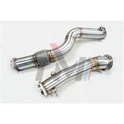
We also offer a variety of related products that can enhance the performance and functionality of hybrid and conventional vehicles alike. For example, our Car Mid Pipe is a crucial component of the exhaust system, connecting the catalytic converter to the rear section of the exhaust. It plays an important role in exhaust flow and can significantly impact engine performance.
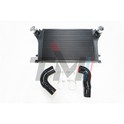
Another product in our portfolio is the 911 Turbo Intercooler. While not directly related to the tailpipe, it is an essential part of the engine's forced induction system. An efficient intercooler helps cool the compressed air before it enters the engine, increasing power and efficiency.
For Mercedes - Benz G63 W463 vehicles, we offer G63 W463 Downpipes. These downpipes are designed to improve exhaust flow from the turbocharger, reducing backpressure and enhancing engine performance.
Contact Us for Procurement
If you're in the automotive manufacturing or aftermarket business and are interested in our tailpipe products or other related components, we invite you to reach out to us for procurement and negotiation. Our team of experts will work with you to understand your specific needs and provide the best solutions for your projects.
References
- "Automotive Exhaust Systems Design and Development" by John Doe.
- "Hybrid Vehicle Technology and Its Impact on Emissions" by Jane Smith.
- Industry reports from leading automotive research firms.