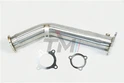
Hey there, car enthusiasts! As a supplier of B58 downpipes, I often get asked about how these parts work in conjunction with oxygen sensors. So, I thought I'd take a deep dive into this topic and share some insights with you.
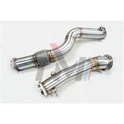
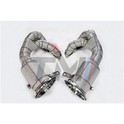
First off, let's talk about what a B58 downpipe is. The B58 is a turbocharged straight-six engine produced by BMW, and the downpipe is an essential part of the exhaust system. It connects the turbocharger to the rest of the exhaust, allowing exhaust gases to flow out of the engine. The main function of a downpipe is to reduce exhaust backpressure, which in turn can improve engine performance, increase horsepower, and enhance fuel efficiency.
Now, let's get to the oxygen sensors. Oxygen sensors, also known as O2 sensors, are crucial components in modern vehicles' emission control systems. They are located in the exhaust system and their primary job is to measure the amount of oxygen in the exhaust gases. This information is then sent to the engine control unit (ECU). The ECU uses this data to adjust the air-fuel ratio in the engine. A proper air-fuel ratio is essential for efficient combustion, reduced emissions, and optimal engine performance.
So, how do B58 downpipes work with oxygen sensors? Well, when you install a B58 downpipe, it can change the way the exhaust gases flow and the environment around the oxygen sensors. A high - quality B58 downpipe, like the ones we supply, is designed to ensure that the oxygen sensors can still function accurately.
One of the key things to consider is the placement of the oxygen sensors. In a stock exhaust system, the oxygen sensors are positioned at specific locations to get an accurate reading of the exhaust gases. When you install a B58 downpipe, you need to make sure that the sensors are still in a position where they can measure the oxygen content correctly. Our downpipes are engineered to maintain the proper sensor placement, so you don't have to worry about inaccurate readings.
Another factor is the flow rate of the exhaust gases. A well - designed B58 downpipe will increase the flow rate of the exhaust gases. This can have an impact on the oxygen sensors because they are calibrated for a certain flow rate in the stock system. However, our downpipes are designed to gradually change the flow characteristics, so the oxygen sensors can adapt to the new conditions. This helps to prevent the ECU from receiving false signals, which could lead to a check engine light or poor engine performance.


Now, let's talk about some of the benefits of using our B58 downpipes in relation to oxygen sensors. By improving the exhaust flow, our downpipes can actually help the oxygen sensors do their job better. With a more consistent and efficient exhaust flow, the oxygen sensors can provide more accurate data to the ECU. This means that the ECU can make more precise adjustments to the air - fuel ratio, resulting in better engine performance and lower emissions.
If you're looking for other related products, we also offer some great options. For example, if you're interested in a high - performance downpipe, check out our 5 Inch Downpipe. It's designed to provide maximum exhaust flow and is a great upgrade for your B58 engine. And if you have a F95 X5M S63, our F95 X5M S63 Downpipes are a perfect fit. They offer similar benefits in terms of improved exhaust flow and compatibility with oxygen sensors. Also, for Toyota Supra 2JZ - GTE owners, we have the Toyota Supra 2JZ - GTE Manifold, which is a high - quality manifold that can enhance the performance of your engine.
When it comes to installation, it's important to note that you should have the B58 downpipe installed by a professional. A professional installer will have the knowledge and tools to ensure that the downpipe is installed correctly and that the oxygen sensors are properly connected. This will help to avoid any potential issues with the oxygen sensors and ensure that your engine runs smoothly.
In addition to performance benefits, using our B58 downpipes can also have long - term advantages for your oxygen sensors. Since the exhaust flow is improved, there is less stress on the sensors. This can extend the lifespan of the oxygen sensors, saving you money on replacement costs in the long run.
We understand that you might have some concerns about compatibility and performance when it comes to B58 downpipes and oxygen sensors. That's why we have a team of experts who are always ready to answer your questions. Whether you're a DIY enthusiast or a professional mechanic, we can provide you with all the information you need to make an informed decision.
If you're interested in purchasing a B58 downpipe or any of our other products, we encourage you to get in touch with us. We're here to help you with your car modification needs and ensure that you get the best performance out of your vehicle. Whether you're looking to increase horsepower, improve fuel efficiency, or just enhance the overall driving experience, our downpipes are a great choice.
In conclusion, a B58 downpipe and oxygen sensors work together in a delicate balance. Our high - quality B58 downpipes are designed to maintain this balance, ensuring that your engine runs efficiently and your oxygen sensors function accurately. So, if you're thinking about upgrading your exhaust system, don't hesitate to reach out to us. We're confident that our products will meet your expectations and take your vehicle's performance to the next level.
References
- Automotive Exhaust Systems: Principles and Design by John Heywood
- Engine Control Systems Handbook edited by Richard Stone