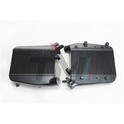
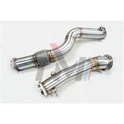
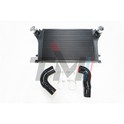
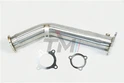
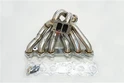
A car downpipe plays a crucial role in the overall exhaust system layout, greatly influencing the performance, sound, and efficiency of a vehicle. As a car downpipe supplier, I've witnessed firsthand how this seemingly simple component can transform the entire exhaust setup. In this blog, I'll delve into the various ways a car downpipe affects the overall exhaust system layout.
1. Exhaust Flow and Backpressure
One of the primary ways a downpipe impacts the exhaust system is by altering the exhaust flow and backpressure. The downpipe is the first section of the exhaust system after the turbocharger (in turbocharged engines) or the exhaust manifold (in naturally aspirated engines). It serves as a conduit for the hot exhaust gases to exit the engine and flow into the rest of the exhaust system.
A well - designed downpipe allows for a smoother and more efficient flow of exhaust gases. In a stock exhaust system, the downpipe may have a small diameter or restrictive bends, which can create backpressure. Backpressure is the resistance that the exhaust gases encounter as they try to exit the engine. While a certain amount of backpressure is necessary for proper engine operation, excessive backpressure can have negative effects.
When the downpipe is upgraded to a larger diameter or a more free - flowing design, the exhaust gases can flow more freely. This reduces backpressure, allowing the engine to "breathe" better. As a result, the engine can expel exhaust gases more quickly, which in turn improves engine efficiency and power output. For example, a high - performance downpipe like the Rs4 B9 Downpipe is engineered to optimize exhaust flow, reducing backpressure and enhancing the overall performance of the Audi RS4 B9.
2. Turbocharger Performance
In turbocharged engines, the downpipe has a direct impact on turbocharger performance. The turbocharger uses the energy from the exhaust gases to spin a turbine, which in turn compresses the incoming air and forces it into the engine. A restrictive downpipe can limit the amount of exhaust gas that reaches the turbocharger, reducing its efficiency.
When a larger or more efficient downpipe is installed, the turbocharger can receive a greater volume of exhaust gases. This allows the turbocharger to spool up more quickly, reducing turbo lag. Turbo lag is the delay between the time the driver presses the accelerator pedal and the time the turbocharger reaches its optimal operating speed. By reducing turbo lag, the engine can respond more quickly to throttle inputs, providing a more immediate and powerful acceleration.
For instance, in a high - performance turbocharged vehicle, upgrading to a high - flow downpipe can significantly improve the turbocharger's performance, resulting in a more responsive and powerful driving experience.
3. Exhaust Sound
The downpipe also has a notable effect on the exhaust sound. The design of the downpipe can influence the tone, volume, and character of the exhaust note. A stock downpipe is often designed to muffle the exhaust sound to meet noise regulations and provide a more subdued driving experience.
However, when a performance downpipe is installed, the exhaust sound can become louder and more aggressive. This is because the free - flowing design of the downpipe allows the exhaust gases to exit the system more quickly, creating a more pronounced exhaust note. Additionally, the shape and diameter of the downpipe can affect the resonance of the exhaust system, which in turn changes the tone of the sound.
Some downpipes are specifically designed to produce a certain type of exhaust sound. For example, a downpipe with a straight - through design may produce a deep, throaty growl, while a downpipe with a more complex internal structure may produce a higher - pitched, more aggressive sound. The M4 Equal Length Mid Pipe not only affects the exhaust flow but also contributes to the unique and sporty exhaust sound of the BMW M4.
4. Overall Exhaust System Layout
The downpipe is an integral part of the overall exhaust system layout. It connects the engine to the rest of the exhaust components, such as the catalytic converter, mid - pipe, and muffler. The design of the downpipe can influence the placement and configuration of these other components.
For example, a high - performance downpipe may require a different catalytic converter or mid - pipe to ensure proper fitment and optimal performance. In some cases, the downpipe may be designed to work in conjunction with a specific exhaust system layout. This means that when upgrading the downpipe, the entire exhaust system may need to be re - evaluated and potentially modified.
In addition, the downpipe can affect the weight distribution of the exhaust system. A heavier downpipe can add extra weight to the front of the vehicle, which may have an impact on handling and performance. On the other hand, a lightweight downpipe can help to reduce the overall weight of the exhaust system, improving the vehicle's power - to - weight ratio.


5. Compatibility with Other Modifications
When considering a downpipe upgrade, it's important to take into account its compatibility with other modifications. For example, if the engine has been tuned for increased power, a high - flow downpipe may be necessary to fully realize the benefits of the tune. Conversely, if the downpipe is upgraded without making corresponding adjustments to the engine management system, it may result in a less - than - optimal performance.
Moreover, the downpipe should be compatible with other exhaust components. For instance, if a new downpipe is installed, it should be able to connect seamlessly to the existing catalytic converter, mid - pipe, and muffler. The Nissan RB20 RB25 Manifold is designed to be compatible with specific Nissan engines, ensuring a proper fit and optimal performance when used in conjunction with other exhaust components.
Conclusion
In conclusion, a car downpipe has a profound impact on the overall exhaust system layout. It affects exhaust flow, backpressure, turbocharger performance, exhaust sound, and the compatibility with other modifications. As a car downpipe supplier, I understand the importance of providing high - quality downpipes that are designed to optimize these aspects.
If you're looking to upgrade your vehicle's exhaust system or are interested in learning more about our downpipe products, I encourage you to reach out to us for a detailed discussion. We can help you choose the right downpipe for your specific vehicle and performance goals. Whether you're a car enthusiast looking for a more powerful and aggressive driving experience or a professional racer seeking every possible edge, our downpipes can make a significant difference.
References
- Smith, J. (2018). "The Science of Exhaust Systems." Automotive Engineering Journal.
- Johnson, A. (2019). "Turbocharger Performance and Exhaust Design." Performance Car Magazine.
- Brown, K. (2020). "Exhaust Sound and Its Impact on Vehicle Character." Car Enthusiast Review.