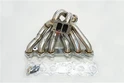
The interaction between an N57 downpipe and a supercharger is a fascinating subject within the realm of automotive performance enhancement. As a supplier of N57 downpipes, I've had the privilege of witnessing firsthand how these components work in tandem to transform a vehicle's performance.
Understanding the Basics: N57 Downpipe and Supercharger
Before delving into their interaction, it's essential to understand what an N57 downpipe and a supercharger are. The N57 is a diesel engine produced by BMW. The downpipe is a crucial part of the exhaust system that connects the turbocharger (or in some cases, a supercharger) to the rest of the exhaust system. It plays a vital role in expelling exhaust gases from the engine efficiently.
A supercharger, on the other hand, is a forced - induction device that compresses the air flowing into the engine. By increasing the air density, more fuel can be burned, resulting in increased power and torque output. There are different types of superchargers, such as roots, twin - screw, and centrifugal superchargers, each with its own unique characteristics.
The Initial Interaction: Airflow and Exhaust Gas Management
When a supercharger is installed in a vehicle with an N57 engine, it starts by compressing the incoming air. This compressed air is then forced into the engine's cylinders, allowing for a more potent combustion process. As the engine burns the fuel - air mixture, exhaust gases are produced.
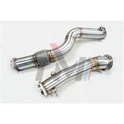
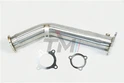
The N57 downpipe comes into play at this stage. It needs to handle the increased volume of exhaust gases generated by the more powerful combustion facilitated by the supercharger. A well - designed N57 downpipe will have a smooth internal surface and an appropriate diameter to minimize backpressure. Backpressure is the resistance that the exhaust gases encounter as they flow through the exhaust system. High backpressure can restrict the flow of exhaust gases, which in turn can limit the engine's performance.
If the downpipe is too small in diameter or has a rough internal surface, it can create a bottleneck. This bottleneck can cause exhaust gases to build up in the engine, reducing the efficiency of the supercharger. The supercharger has to work harder to push the air into the cylinders against the resistance caused by the high backpressure in the exhaust system. As a result, the engine may not achieve its full power potential, and fuel economy can also be negatively affected.
Impact on Turbo Lag and Power Delivery
One of the significant benefits of a proper interaction between the N57 downpipe and the supercharger is the reduction of turbo lag. Turbo lag is the delay between the moment the driver presses the accelerator pedal and the moment the turbocharger (or supercharger in this case) provides a noticeable increase in power.
A high - quality N57 downpipe allows the exhaust gases to flow out of the engine more quickly. This means that the supercharger can spool up faster, as it doesn't have to wait for the exhaust gases to clear the exhaust system. As a result, the power delivery becomes more immediate, and the vehicle responds more promptly to the driver's inputs.
In terms of power delivery, the combination of an efficient N57 downpipe and a supercharger can result in a broader power band. The supercharger provides a boost in power at lower engine speeds, while the well - designed downpipe ensures that this power is maintained and even increased as the engine speed rises. This results in a more linear and consistent power delivery, making the vehicle more enjoyable to drive.
Temperature Management
Another aspect of the interaction between the N57 downpipe and the supercharger is temperature management. The supercharger compresses the air, which raises its temperature. At the same time, the combustion process in the engine generates a significant amount of heat, which is carried away by the exhaust gases.
The N57 downpipe needs to be able to withstand high temperatures and also help dissipate heat. A downpipe made from high - quality materials, such as stainless steel or titanium, can better handle the extreme temperatures. Additionally, a well - designed downpipe can help reduce the heat transfer to other components in the engine bay. This is important because excessive heat can affect the performance of the supercharger and other engine components.
For example, if the supercharger overheats, its efficiency can decrease, and it may even suffer damage over time. By effectively managing the temperature of the exhaust gases, the N57 downpipe helps to maintain the optimal operating conditions for the supercharger and the entire engine.
Compatibility and Tuning
To ensure the best interaction between the N57 downpipe and the supercharger, compatibility and tuning are crucial. Not all N57 downpipes are created equal, and they need to be compatible with the specific supercharger setup. Factors such as the flange design, the routing of the downpipe, and the diameter need to be carefully considered.
Tuning is also essential. The engine control unit (ECU) of the vehicle needs to be reprogrammed to take into account the changes made by the installation of the supercharger and the N57 downpipe. The ECU controls various parameters such as fuel injection timing, ignition timing, and boost pressure. By tuning the ECU, the engine can be optimized to work in harmony with the new components, maximizing performance and efficiency.
Related Products and Their Role
In addition to the N57 downpipe and the supercharger, there are other related products that can enhance the overall performance of the vehicle. For example, a Titanium Tailpipe can be a great addition. A titanium tailpipe is lightweight and has excellent heat - resistant properties. It can further improve the exhaust flow and also give the vehicle a more aggressive look.
Another relevant product is the F82 M4 Downpipe. Although it is designed for the F82 M4, some of the design principles can be applied to the N57 engine. The F82 M4 downpipe is engineered to provide a smooth exhaust flow and reduce backpressure, which are also important factors for the N57 engine with a supercharger.
The 5 Inch Exhaust Tail Pipe can also be considered. A larger diameter tailpipe can help to further reduce backpressure and improve the overall exhaust system performance. It can work in conjunction with the N57 downpipe and the supercharger to enhance the vehicle's power and sound.


Conclusion and Call to Action
In conclusion, the interaction between an N57 downpipe and a supercharger is a complex but highly rewarding process. When these two components work together seamlessly, they can significantly enhance a vehicle's performance, including power output, torque, and throttle response. As a supplier of N57 downpipes, I have the expertise and the high - quality products to ensure that your vehicle achieves its full potential.
If you're interested in upgrading your vehicle's performance with an N57 downpipe and optimizing its interaction with a supercharger, I invite you to contact me for a detailed discussion. We can explore the best options for your specific vehicle and requirements, and I'm confident that we can find a solution that meets your expectations.
References
- Smith, J. (2018). "Automotive Exhaust Systems: Design and Performance." Publisher: AutoTech Press.
- Johnson, A. (2020). "Supercharger Technology and Applications." Publisher: Performance Motors Books.