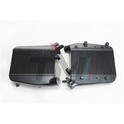
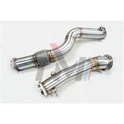
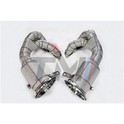
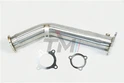
Backpressure is a critical concept in the world of automotive exhaust systems, especially when it comes to high - performance vehicles like the F80 M3. As a supplier of F80 M3 midpipes, I've witnessed firsthand the impact that these components can have on backpressure and, by extension, the overall performance of the vehicle. In this blog, I'll delve into the science behind backpressure, how the F80 M3 midpipe affects it, and why it matters to car enthusiasts and performance - oriented drivers.
Understanding Backpressure
Before we explore the role of the F80 M3 midpipe, it's essential to understand what backpressure is. In an exhaust system, backpressure refers to the resistance that the exhaust gases encounter as they flow out of the engine and through the exhaust pipes. This resistance is created by various components in the exhaust system, such as the catalytic converters, mufflers, and the pipes themselves.
Backpressure is not inherently a bad thing. In fact, a certain amount of backpressure is necessary for the proper functioning of an engine. It helps to maintain the scavenging effect, which is the process by which the exhaust gases are expelled from the combustion chamber. A well - regulated backpressure ensures that the exhaust valves close at the right time, preventing the re - entry of exhaust gases into the combustion chamber and allowing fresh air - fuel mixture to enter efficiently.


However, too much backpressure can be detrimental to engine performance. It can cause the engine to work harder to expel the exhaust gases, reducing power output, increasing fuel consumption, and potentially leading to overheating. On the other hand, too little backpressure can also be a problem. It can disrupt the scavenging effect, causing a loss of low - end torque and making the engine less responsive at lower RPMs.
The Role of the F80 M3 Midpipe
The midpipe is a crucial part of the exhaust system, located between the catalytic converters and the mufflers. In the F80 M3, the midpipe plays a significant role in determining the amount of backpressure in the system.
One of the primary functions of the F80 M3 midpipe is to smooth out the flow of exhaust gases. It acts as a conduit, allowing the gases to move from the catalytic converters to the mufflers in a more organized manner. A well - designed midpipe can reduce turbulence and minimize restrictions, which in turn can affect backpressure.
When it comes to aftermarket F80 M3 midpipes, there are several factors that can influence backpressure. The diameter of the midpipe is one of the most important factors. A larger diameter midpipe generally allows for a more unrestricted flow of exhaust gases, which can reduce backpressure. However, if the diameter is too large, it can lead to a loss of backpressure that is necessary for proper engine operation.
The material of the midpipe also matters. Stainless steel is a popular choice for aftermarket midpipes because it is durable, resistant to corrosion, and has good heat - dissipation properties. A midpipe made of high - quality stainless steel can maintain its shape and integrity under high temperatures, ensuring a consistent flow of exhaust gases and a stable backpressure.
Another factor is the design of the midpipe. Some midpipes are designed with straight - through designs, which offer the least amount of resistance to exhaust flow. These types of midpipes can significantly reduce backpressure, but they may also cause a loss of low - end torque. Other midpipes are designed with a more restrictive layout, which can help to maintain a certain level of backpressure while still improving overall exhaust flow.
Impact on Engine Performance
The effect of the F80 M3 midpipe on backpressure directly impacts engine performance. As mentioned earlier, a reduction in backpressure can lead to an increase in power output, especially at higher RPMs. When the exhaust gases can flow more freely through the system, the engine doesn't have to work as hard to expel them. This allows the engine to breathe better, resulting in more power and a higher top speed.
However, as we've also discussed, too much of a reduction in backpressure can have negative consequences. For example, a significant drop in backpressure can cause a loss of low - end torque. This means that the engine may feel sluggish at lower RPMs, making it less responsive in stop - and - go traffic or during low - speed acceleration.
A well - balanced F80 M3 midpipe can provide the best of both worlds. It can reduce backpressure enough to improve high - end power while still maintaining enough backpressure to ensure good low - end torque. This is where the expertise of a quality midpipe supplier comes in. By carefully selecting the right diameter, material, and design, we can create a midpipe that optimizes backpressure for the F80 M3 engine.
Other Considerations
In addition to backpressure and engine performance, there are other factors to consider when choosing an F80 M3 midpipe. One of these is sound. The midpipe can have a significant impact on the exhaust note of the vehicle. A less restrictive midpipe will generally produce a louder and more aggressive exhaust sound, which is often desirable for car enthusiasts.
Another consideration is emissions. While aftermarket midpipes can improve performance, they may also affect emissions. Some midpipes are designed to work with the vehicle's existing catalytic converters to ensure that emissions remain within legal limits. It's important to choose a midpipe that is compliant with local emissions regulations to avoid any legal issues.
Related Products
If you're interested in further enhancing your F80 M3's exhaust system, we also offer related products such as the G80 M3 Downpipe. The downpipe is another critical component that can have a significant impact on exhaust flow and backpressure. Additionally, we have the 3 Inch Cat Back Exhaust System and the Stainless Steel Cat Back Exhaust System, which can work in conjunction with the midpipe to provide a complete exhaust upgrade.
Conclusion
In conclusion, the F80 M3 midpipe plays a vital role in determining the amount of backpressure in the exhaust system. By carefully considering factors such as diameter, material, and design, we can create a midpipe that optimizes backpressure for improved engine performance. Whether you're looking for more power, a better exhaust sound, or a combination of both, choosing the right midpipe is crucial.
As a supplier of F80 M3 midpipes, we have the expertise and experience to provide you with a high - quality product that meets your needs. If you're interested in learning more about our products or discussing your specific requirements, please don't hesitate to contact us. We're here to help you take your F80 M3 to the next level.
References
- Heywood, J. B. (1988). Internal Combustion Engine Fundamentals. McGraw - Hill.
- Crolla, D. A. (2001). Automotive Mechanics. Elsevier.
- Taylor, C. F. (1966). The Internal - Combustion Engine in Theory and Practice. MIT Press.