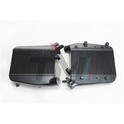
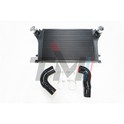
The performance of an engine is a complex interplay of various components, and one often-overlooked yet crucial part is the intercooler. In the context of the N20 engine, the intercooler plays a significant role in shaping the engine's power curve. As a supplier of N20 intercoolers, I've witnessed firsthand how these components can transform an engine's performance.
The Basics of an Intercooler
Before delving into how the N20 intercooler affects the engine's power curve, it's essential to understand what an intercooler does. In a turbocharged or supercharged engine, the air compressor (turbocharger or supercharger) compresses the incoming air. This compression process increases the air temperature, which reduces its density. Since the engine's power output is directly related to the amount of air - and subsequently, oxygen - it can intake, hot air is less efficient for combustion.
An intercooler is a heat exchanger that cools the compressed air before it enters the engine's intake manifold. By reducing the air temperature, the intercooler increases the air density, allowing more oxygen to enter the combustion chamber. This results in more efficient combustion and, ultimately, increased power output.
Impact on the Low - End Power Curve
In the N20 engine, the intercooler has a notable impact on the low - end power curve. At lower engine speeds, the turbocharger may not be spooled up to its maximum efficiency. The compressed air still experiences some heating during the compression process, even at these lower boost levels. A well - designed N20 intercooler can quickly cool this relatively small amount of compressed air.
When the air is cooler and denser at low engine speeds, the engine can achieve better combustion. This means that the engine can generate more torque at lower RPMs, improving drivability in stop - and - go traffic or when accelerating from a standstill. For example, in a city driving scenario, the enhanced low - end torque provided by an efficient N20 intercooler allows for smoother and quicker acceleration, making the vehicle more responsive.
Influence on the Mid - Range Power Curve
The mid - range of the engine's power curve is where many drivers spend a significant amount of their driving time. In the N20 engine, the turbocharger is usually operating at a more consistent and efficient level in this RPM range. The intercooler continues to play a vital role here.
As the engine speed increases, the turbocharger compresses more air, and the air temperature rises further. A high - quality N20 intercooler can handle the increased volume of hot air and effectively cool it. This results in a more consistent supply of dense, cool air to the engine. With more oxygen available for combustion, the engine can produce more power throughout the mid - range.
This increased mid - range power is beneficial for overtaking on the highway or climbing hills. For instance, when you need to quickly pass another vehicle on a two - lane road, the additional power in the mid - range provided by the N20 intercooler gives you the confidence and ability to make a safe pass.
Effect on the High - End Power Curve
At high engine speeds, the N20 engine is under a lot of stress, and the turbocharger is working at its maximum capacity. The compressed air is extremely hot, and the volume of air being compressed is significant. An efficient N20 intercooler is crucial at this stage to prevent power loss due to heat - soaked air.
If the intercooler fails to cool the compressed air adequately at high RPMs, the air density will decrease, and the engine will experience a loss of power. A well - engineered N20 intercooler, however, can maintain a relatively low air temperature even under these extreme conditions. This allows the engine to continue generating power at high speeds, providing a more exhilarating driving experience on the racetrack or during high - speed highway driving.
How Our N20 Intercoolers Stand Out
As a supplier of N20 intercoolers, we take pride in the quality and performance of our products. Our intercoolers are designed with advanced materials and manufacturing techniques to ensure maximum heat dissipation. We use high - grade aluminum alloy, which has excellent thermal conductivity, allowing for efficient cooling of the compressed air.
The internal fin design of our N20 intercoolers is optimized to increase the surface area for heat transfer. This means that the air spends more time in contact with the cooling fins, resulting in better cooling efficiency. Additionally, our intercoolers are tested rigorously to ensure they can withstand the high pressures and temperatures associated with the N20 engine's operation.
We also offer a range of intercooler options to suit different driving needs. Whether you're a daily commuter looking for improved low - end torque or a performance enthusiast seeking maximum high - end power, we have an N20 intercooler that can meet your requirements.
Complementary Products
In addition to our high - quality N20 intercoolers, we also offer a range of related products that can further enhance your engine's performance. For example, we supply G63 W463 Heat Shield Downpipes, AMG S63 M177 Downpipes, and F96 X6M S63 Downpipes. These downpipes are designed to improve exhaust flow, reducing backpressure and allowing the engine to breathe more freely. When combined with our N20 intercooler, they can provide a significant boost in overall engine performance.
Contact Us for Purchase and Consultation
If you're interested in improving your N20 engine's performance, our N20 intercoolers are the perfect solution. Whether you're a car enthusiast looking to upgrade your vehicle or a professional mechanic seeking high - quality parts for your customers, we can provide the products and expertise you need.
We invite you to contact us to discuss your specific requirements. Our team of experts is ready to assist you in choosing the right N20 intercooler for your engine and answer any questions you may have. Let us help you unlock the full potential of your N20 engine.


References
- Heywood, J. B. (1988). Internal Combustion Engine Fundamentals. McGraw - Hill.
- Crolla, D. A. (2001). Vehicle Dynamics: Theory and Application. Society of Automotive Engineers.
- Taylor, C. F. (1966). The Internal - Combustion Engine in Theory and Practice. MIT Press.