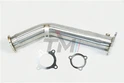
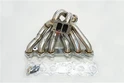
What is the flexibility of a midpipe design?
As a midpipe supplier, I've had the privilege of delving deep into the world of exhaust system components. The midpipe, often overlooked in the grand scheme of automotive performance, plays a crucial role in the overall functionality and performance of a vehicle's exhaust system. In this blog post, I'll explore the flexibility of midpipe design and how it can significantly impact a vehicle's performance, efficiency, and sound.
The Basics of Midpipe Design
Before we dive into the flexibility of midpipe design, let's first understand what a midpipe is and its primary functions. A midpipe is a section of the exhaust system that connects the catalytic converter (or downpipe) to the muffler or rear section of the exhaust. Its main functions include reducing exhaust gas temperature, reducing backpressure, and improving exhaust flow.
The design of a midpipe can vary significantly depending on several factors, including the vehicle's make and model, engine specifications, and intended use. Some midpipes are designed to be straight and simple, while others may incorporate bends, curves, or expansion chambers to optimize exhaust flow and performance.
Flexibility in Design for Performance
One of the key aspects of midpipe design flexibility is its ability to enhance a vehicle's performance. By optimizing the diameter, length, and shape of the midpipe, we can improve exhaust flow and reduce backpressure, which in turn can increase horsepower and torque. For example, a larger diameter midpipe can allow for greater exhaust gas flow, while a shorter midpipe can reduce the distance that exhaust gases need to travel, resulting in quicker expulsion and improved engine response.
In addition to diameter and length, the shape of the midpipe can also have a significant impact on performance. For instance, a mandrel-bent midpipe, which is bent using a mandrel to maintain a consistent internal diameter, can provide smoother exhaust flow compared to a crush-bent midpipe, which may have restrictions or kinks that impede flow.
Another way to enhance performance through midpipe design is by incorporating resonators or mufflers within the midpipe itself. These components can help to reduce exhaust noise while still allowing for optimal exhaust flow. By carefully selecting the type and size of resonator or muffler, we can fine-tune the sound and performance of the exhaust system to meet the specific needs of the vehicle and its owner.
Flexibility in Design for Sound
The sound of a vehicle's exhaust is often a significant factor for many car enthusiasts. Midpipe design offers a great deal of flexibility in shaping the sound of the exhaust system. By adjusting the length, diameter, and shape of the midpipe, as well as the use of resonators and mufflers, we can create a wide range of exhaust notes, from a deep, aggressive rumble to a more subdued, refined tone.
For example, a midpipe with a larger diameter and fewer restrictions can produce a louder, more aggressive exhaust note, while a midpipe with a smaller diameter and more resonators or mufflers can produce a quieter, more refined sound. Additionally, the placement of resonators and mufflers within the midpipe can also affect the sound characteristics. Placing a resonator closer to the engine can help to reduce high-frequency noise, while placing a muffler towards the rear of the midpipe can help to dampen low-frequency noise.
Flexibility in Design for Compatibility
One of the challenges in midpipe design is ensuring compatibility with different vehicles and exhaust systems. As a midpipe supplier, we understand the importance of offering a wide range of midpipe designs to fit various makes and models of vehicles. This requires a high degree of flexibility in our design and manufacturing processes.
We use advanced computer-aided design (CAD) software to create custom midpipe designs that are tailored to the specific requirements of each vehicle. This allows us to ensure a perfect fit and optimal performance, regardless of the vehicle's engine size, exhaust layout, or other factors.
In addition to custom designs, we also offer a range of universal midpipes that can be adapted to fit multiple vehicles. These midpipes are designed with adjustable flanges, clamps, or connectors that allow for easy installation and customization. This flexibility makes it easier for our customers to find a midpipe that meets their needs, even if they have a unique or modified vehicle.
Flexibility in Design for Environmental Considerations
In today's automotive industry, environmental considerations are becoming increasingly important. Midpipe design can play a role in reducing emissions and improving fuel efficiency. By optimizing the design of the midpipe to reduce backpressure and improve exhaust flow, we can help the engine to operate more efficiently, which in turn can reduce fuel consumption and emissions.
For example, a midpipe with a catalytic converter integrated into its design can help to reduce harmful pollutants in the exhaust gases. The catalytic converter uses a catalyst to convert harmful gases such as carbon monoxide, hydrocarbons, and nitrogen oxides into less harmful substances such as carbon dioxide, water, and nitrogen. By carefully selecting the type and size of catalytic converter, we can ensure that it meets the specific emission requirements of the vehicle and the region in which it is being used.
Examples of Midpipe Design Flexibility
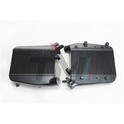
To illustrate the flexibility of midpipe design, let's take a look at some specific examples. Consider a high-performance sports car like the AMG GT. The AMG GT Radiators are designed to provide optimal cooling for the engine, but the midpipe also plays a crucial role in the overall performance and sound of the vehicle. A custom-designed midpipe for the AMG GT can be optimized to improve exhaust flow, increase horsepower, and create a more aggressive exhaust note.
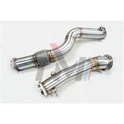
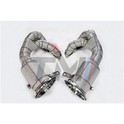
Another example is the Audi S4 B9. The S4 B9 Downpipe is an important component of the exhaust system, and the midpipe can be designed to work in conjunction with it to further enhance performance. A midpipe with a larger diameter and mandrel-bent construction can reduce backpressure and improve exhaust flow, resulting in increased horsepower and torque.


Finally, let's consider the BMW M50 M52. The BMW M50 M52 Manifold is a critical part of the engine's intake system, and the midpipe can be designed to complement it and improve the overall performance of the vehicle. A well-designed midpipe can help to reduce exhaust gas temperature, improve exhaust flow, and enhance the sound of the engine.
Contact Us for Your Midpipe Needs
If you're looking for a high-quality midpipe for your vehicle, look no further. As a leading midpipe supplier, we have the expertise and experience to provide you with the perfect midpipe solution for your needs. Whether you're looking to improve performance, enhance sound, or ensure compatibility with your vehicle, we can help.
Contact us today to discuss your midpipe requirements and to learn more about our products and services. Our team of experts is ready to assist you in finding the right midpipe for your vehicle and to answer any questions you may have.
References
- Smith, J. (2020). Automotive Exhaust System Design. New York: Elsevier.
- Johnson, R. (2019). Performance Exhaust Systems: Principles and Design. London: SAE International.
- Brown, A. (2018). The Science of Exhaust Flow. Automotive Engineering Magazine, 45(3), 22-27.