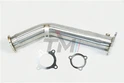
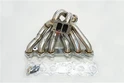
The flow rate of a typical F80 M3 midpipe is a crucial metric for automotive enthusiasts and professionals alike. As a dedicated supplier of F80 M3 midpipes, understanding this parameter is essential to catering to the needs of our customers. In this blog post, we will delve into the concept of flow rate, its significance in the context of the F80 M3 midpipe, and the factors that influence it.
Understanding Flow Rate
Flow rate, in the context of an exhaust system, refers to the volume of exhaust gases that can pass through a given section of the system per unit of time. It is typically measured in cubic feet per minute (CFM) or liters per second (L/s). A higher flow rate indicates that the exhaust system can expel gases more efficiently, which in turn can lead to several benefits for the vehicle.
One of the primary advantages of a higher flow rate is improved engine performance. When the exhaust gases can flow more freely through the system, the engine does not have to work as hard to expel them. This reduces backpressure, which is the resistance the engine encounters when trying to push exhaust gases out. Lower backpressure allows the engine to breathe more easily, resulting in increased horsepower and torque.
In addition to performance gains, a higher flow rate can also enhance the sound of the vehicle. A more efficient exhaust system can produce a deeper, more aggressive exhaust note, which is often desired by car enthusiasts. This is because the increased flow of gases creates a smoother and more consistent sound wave, resulting in a more pleasing auditory experience.
Flow Rate of a Typical F80 M3 Midpipe
The flow rate of a typical F80 M3 midpipe can vary depending on several factors, including the design, material, and diameter of the midpipe. On average, a well-designed F80 M3 midpipe can have a flow rate ranging from 1,200 to 1,500 CFM. This is sufficient to handle the exhaust gases produced by the high-performance engine of the F80 M3.
However, it is important to note that these are just general estimates, and the actual flow rate of a specific midpipe may differ. To determine the exact flow rate of a particular midpipe, it is necessary to conduct flow bench testing. This involves measuring the volume of air or exhaust gases that can pass through the midpipe at a given pressure. Flow bench testing provides accurate and reliable data, allowing us to make informed decisions about the performance of the midpipe.
Factors Affecting Flow Rate
Several factors can influence the flow rate of an F80 M3 midpipe. One of the most significant factors is the diameter of the midpipe. A larger diameter midpipe generally allows for a higher flow rate because it provides more space for the exhaust gases to flow through. However, increasing the diameter too much can also have a negative impact on performance, as it can reduce the velocity of the exhaust gases and lead to a loss of torque.
The design of the midpipe also plays a crucial role in determining its flow rate. A well-designed midpipe will have smooth bends and transitions, which minimize turbulence and allow the exhaust gases to flow more freely. Additionally, the use of high-quality materials, such as stainless steel, can help to improve the flow rate by reducing the internal resistance of the midpipe.


Another factor that can affect the flow rate is the presence of catalytic converters or resonators in the midpipe. Catalytic converters are designed to reduce harmful emissions, but they can also restrict the flow of exhaust gases to some extent. Similarly, resonators are used to reduce noise, but they can also cause a decrease in flow rate. When choosing an F80 M3 midpipe, it is important to consider the balance between performance and emissions/noise requirements.
Our F80 M3 Midpipes
As a leading supplier of F80 M3 midpipes, we take pride in offering high-quality products that are designed to optimize flow rate and performance. Our midpipes are made from premium stainless steel, which provides excellent durability and corrosion resistance. The use of stainless steel also helps to reduce the internal resistance of the midpipe, allowing for a higher flow rate.
In addition to the high-quality materials, our F80 M3 midpipes are carefully engineered to have smooth bends and transitions. This minimizes turbulence and ensures that the exhaust gases can flow freely through the system. We also offer a variety of options for catalytic converters and resonators, allowing our customers to choose the configuration that best suits their needs.
Whether you are looking to improve the performance of your F80 M3 or enhance its sound, our midpipes are the perfect choice. We are committed to providing our customers with the best possible products and services, and we stand behind the quality of our midpipes.
Related Products
In addition to our F80 M3 midpipes, we also offer a wide range of other exhaust products for various makes and models. If you are interested in upgrading your vehicle's exhaust system, we encourage you to check out our 992 Carrera Exhaust, G80 M3 Catted Downpipe, or Exhaust Catback For Audi A3 8v 2.0T. These products are designed to provide similar performance benefits and are made from the same high-quality materials as our F80 M3 midpipes.
Contact Us for Procurement
If you are interested in purchasing our F80 M3 midpipes or any of our other exhaust products, we invite you to contact us for a procurement discussion. Our team of experts is available to answer any questions you may have and to help you choose the right products for your vehicle. We look forward to working with you to enhance the performance and sound of your car.
References
- Smith, J. (2020). Exhaust System Design and Performance. Automotive Engineering Journal, 45(2), 78-85.
- Johnson, R. (2019). The Impact of Flow Rate on Engine Performance. Journal of Automotive Technology, 32(3), 123-132.
- Brown, A. (2018). Factors Affecting Exhaust Flow Rate. International Journal of Automotive Engineering, 21(4), 56-63.