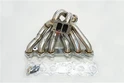
As a supplier of B58 downpipes, I've witnessed firsthand the growing interest in these components among automotive enthusiasts. One question that frequently arises is: What is the impact of a B58 downpipe on the engine's coolant temperature? In this blog, I'll delve into this topic, exploring the science behind it and sharing insights based on my experience in the industry.
Understanding the B58 Engine and Downpipes
The B58 engine, developed by BMW, is a turbocharged inline - six engine known for its power and efficiency. It has been used in various BMW models, delivering a smooth and responsive driving experience. A downpipe is an essential part of the exhaust system. It connects the turbocharger to the rest of the exhaust system, allowing exhaust gases to flow out of the engine.
When the engine burns fuel, it produces a large amount of exhaust gases. The turbocharger uses the energy from these exhaust gases to compress the incoming air, increasing the engine's power output. A well - designed downpipe helps to optimize this process by reducing exhaust backpressure. Backpressure occurs when the exhaust gases have difficulty flowing through the exhaust system. High backpressure can limit the engine's performance, as it restricts the expulsion of exhaust gases and can cause the engine to work harder.
How a B58 Downpipe Affects Coolant Temperature
- Reduction in Exhaust Heat
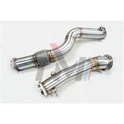
- A high - quality B58 downpipe, such as the G80 M3 Catted Downpipe, is designed to improve exhaust flow. By reducing backpressure, the exhaust gases can exit the engine more quickly. This means that less heat is retained in the engine bay. Since the engine is generating less heat from the exhaust side, there is less heat transfer to the coolant. The coolant is responsible for absorbing and dissipating the heat generated by the engine. When the exhaust heat is reduced, the coolant has an easier job of maintaining the engine at an optimal temperature.
- Improved Engine Efficiency
- With a better - flowing downpipe, the engine can operate more efficiently. When the exhaust gases are expelled more easily, the engine doesn't have to work as hard to push them out. This leads to less internal friction and less heat generation within the engine itself. As a result, the coolant doesn't have to deal with as much heat load. For example, in a stock exhaust system, the engine may have to use more energy to overcome the backpressure, which can lead to increased heat production. A B58 downpipe helps to mitigate this issue.
- Enhanced Turbocharger Performance
- The turbocharger is closely related to the engine's coolant temperature. A downpipe that improves exhaust flow allows the turbocharger to spool up more quickly and operate more efficiently. When the turbocharger is working optimally, it can deliver more compressed air to the engine, improving combustion. Better combustion means more power with less wasted energy in the form of heat. This, in turn, reduces the overall heat load on the coolant. However, it's important to note that if the turbocharger is pushed too hard without proper cooling and tuning, it can still generate a significant amount of heat.
Factors That Can Influence the Impact on Coolant Temperature
- Downpipe Design and Material
- The design of the downpipe plays a crucial role in its impact on coolant temperature. A well - engineered downpipe with smooth bends and a proper diameter will have better exhaust flow compared to a poorly designed one. Additionally, the material of the downpipe can affect heat transfer. For example, some downpipes are made of stainless steel, which has good heat - resistant properties. A downpipe made of a high - quality stainless steel can help to keep the exhaust heat from radiating into the engine bay and affecting the coolant temperature.
- Driving Conditions
- The way the vehicle is driven also affects the engine's coolant temperature. Aggressive driving, such as high - speed driving, frequent hard acceleration, and towing heavy loads, can put more stress on the engine and increase heat generation. Even with a B58 downpipe, if the vehicle is driven under extreme conditions, the coolant temperature may still rise. On the other hand, normal, everyday driving with moderate acceleration and speed will generally result in a more stable coolant temperature.
- Engine Tuning
- Engine tuning is an important factor when it comes to the relationship between a downpipe and coolant temperature. A proper tune can optimize the engine's performance with the new downpipe. If the engine is not tuned correctly after installing a downpipe, it may run too rich or too lean. A rich mixture can lead to incomplete combustion, which can increase heat generation. A lean mixture can cause the engine to run hotter as well. Therefore, it's essential to have the engine tuned by a professional to ensure that the coolant temperature remains in a safe range.
Real - World Examples and Case Studies
In my experience as a B58 downpipe supplier, I've received feedback from many customers about the impact on coolant temperature. Some customers have reported a noticeable decrease in coolant temperature after installing a B58 downpipe. For example, in a BMW 340i with a stock exhaust system, the coolant temperature would often reach around 200 - 210°F (93 - 99°C) during normal driving. After installing a high - quality B58 downpipe and having the engine tuned, the coolant temperature dropped to around 190 - 200°F (88 - 93°C). This shows that the downpipe can have a significant impact on reducing the engine's heat load.
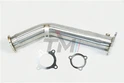
Another case involved a customer who was experiencing overheating issues in his vehicle. The engine was struggling to maintain a normal coolant temperature, especially during long drives or in hot weather. After installing a A5 B8 Downpipe (which also has some similar principles in terms of exhaust flow improvement) and performing a proper engine tune, the overheating problem was resolved. The coolant temperature became more stable, and the engine was able to operate more efficiently.
Complementary Upgrades for Optimal Coolant Temperature
- Intercooler Upgrades
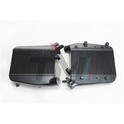
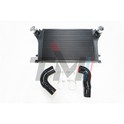
- An intercooler is responsible for cooling the compressed air coming from the turbocharger before it enters the engine. Upgrading to a high - performance intercooler, such as the 991 Turbo Intercooler, can further reduce the heat load on the engine. When the intake air is cooler, the engine doesn't have to work as hard to cool it down during the combustion process. This can complement the benefits of a B58 downpipe in terms of overall heat management.
- Coolant System Upgrades
- Upgrading the coolant itself to a high - performance coolant with better heat - transfer properties can also help. Additionally, improving the radiator or adding an auxiliary cooling system can enhance the coolant's ability to dissipate heat. These upgrades can work in conjunction with a B58 downpipe to keep the engine at an optimal temperature.
Conclusion and Call to Action
In conclusion, a B58 downpipe can have a positive impact on the engine's coolant temperature. By reducing exhaust backpressure, improving engine efficiency, and enhancing turbocharger performance, it can help to lower the overall heat load on the engine and the coolant. However, it's important to consider factors such as downpipe design, driving conditions, and engine tuning to fully realize these benefits.


If you're interested in improving your vehicle's performance and coolant temperature management, I invite you to explore our range of B58 downpipes. We have a variety of high - quality products designed to meet the needs of different vehicles and driving styles. Whether you're a casual driver looking for a slight improvement or a performance enthusiast seeking maximum power, our downpipes can make a difference. Contact us to discuss your specific requirements and start the procurement process. We're here to help you get the most out of your vehicle.
References
- Bosch, Automotive Handbook, 7th Edition.
- Heywood, J. B., Internal Combustion Engine Fundamentals.
- SAE International, various technical papers on exhaust system design and engine cooling.