Hey there, car enthusiasts! If you're into tweaking and upgrading your ride, you've probably heard about charge pipes and intake manifolds. As a charge pipe supplier, I've seen firsthand how these components can make a big difference in an engine's performance. So, let's dive into what the relationship between a charge pipe and the engine's intake manifold is all about.


What's a Charge Pipe Anyway?
First things first, let's talk about charge pipes. A charge pipe is a crucial part of a turbocharged or supercharged engine. Its main job is to carry the compressed air from the turbocharger or supercharger to the engine's intake manifold. When your engine has forced induction (turbo or supercharger), it squeezes more air into the combustion chamber. This compressed air has more oxygen, which means more fuel can be burned, resulting in more power.
The charge pipe needs to be sturdy and airtight. If there are any leaks in the charge pipe, you're losing that precious compressed air. That's like having a hole in your pocket - all that extra power just slips away. You might notice a drop in performance, slower acceleration, or even some rough idling.
The Role of the Intake Manifold
Now, let's shift our focus to the intake manifold. This is like the distribution center for the engine. Its job is to evenly distribute the incoming air - whether it's compressed from the charge pipe or just normal air in a naturally aspirated engine - to each cylinder.
The intake manifold has a series of runners, which are like little pipes that lead to each cylinder. These runners are designed to optimize the flow of air and fuel mixture into the cylinders. A well - designed intake manifold can improve the engine's efficiency, power output, and fuel economy.
How They Work Together
So, how do the charge pipe and the intake manifold work together? Well, it's a pretty seamless process. The turbocharger or supercharger compresses the air, and this compressed air is then sent through the charge pipe. The charge pipe acts as a bridge, connecting the turbo/supercharger to the intake manifold.
Once the compressed air reaches the intake manifold, it gets distributed to each cylinder. The intake manifold makes sure that each cylinder gets the right amount of air, so the engine runs smoothly and efficiently. If the charge pipe isn't doing its job properly, say it's clogged or has a leak, the intake manifold won't get the proper amount of compressed air. This can lead to an imbalance in the air - fuel mixture in the cylinders, which can cause all sorts of problems.
Why Upgrading Matters
As a charge pipe supplier, I often get asked why someone would want to upgrade their charge pipe. Well, stock charge pipes are usually made of plastic or rubber, which can have some limitations. Plastic charge pipes can crack over time, especially if they're exposed to high temperatures. Rubber charge pipes can expand under pressure, which can lead to a loss of boost pressure.
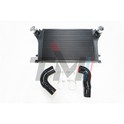
Upgrading to a high - quality charge pipe, like the ones we offer, can make a significant difference. A metal charge pipe, for example, is more durable and less likely to crack or expand. This means you'll have a more consistent flow of compressed air to the intake manifold, resulting in better engine performance.
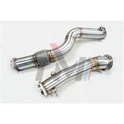
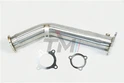
If you're also looking to upgrade other parts of your exhaust system, we've got some great options. Check out our A5 B9 Downpipe, B58 OPF Downpipe, and AMG GT Downpipes. These downpipes can further enhance your vehicle's performance by improving exhaust flow.
Signs of a Problem
It's important to know the signs of a problem with your charge pipe or intake manifold. If you notice a decrease in power, poor acceleration, or a hissing sound coming from under the hood, it could be a sign of a charge pipe leak. A dirty or clogged intake manifold can also cause problems, like rough idling or a decrease in fuel economy.
If you suspect there's an issue with either of these components, it's a good idea to have them checked out. And if you're thinking about an upgrade, we're here to help.
Conclusion
In conclusion, the relationship between a charge pipe and the engine's intake manifold is crucial for the proper functioning of a turbocharged or supercharged engine. The charge pipe delivers the compressed air to the intake manifold, and the intake manifold distributes it evenly to the cylinders. Upgrading your charge pipe can improve performance, and making sure both components are in good condition is essential for a smooth - running engine.
If you're interested in upgrading your charge pipe or have any questions about how it works with your engine's intake manifold, don't hesitate to reach out. We're here to help you get the most out of your vehicle. Whether you're a weekend racer or just want a bit more power on your daily commute, we've got the right charge pipe for you. Let's talk about how we can enhance your engine's performance together.
References
- "Turbocharger Basics" - Car and Driver Magazine
- "Intake Manifold Design and Function" - SAE International Journal
- "Upgrading Charge Pipes for Performance" - Performance Car Tuning Handbook