Hey there, car enthusiasts! As a supplier of car downpipes, I've seen firsthand how crucial each component of a downpipe is. Today, I want to dive deep into one particular part: the flex section. So, what exactly is the role of a flex section in a car downpipe? Let's find out.
What is a Flex Section?
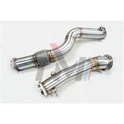
First things first, let's understand what a flex section is. In simple terms, a flex section is a flexible part in the car downpipe. It's usually made of a special type of metal that can bend and stretch without breaking. You can think of it as a kind of "joint" in the downpipe system. This flexibility is what makes it so important.
Absorbing Vibrations
One of the main roles of the flex section is to absorb vibrations. When your car's engine is running, it creates a lot of vibrations. These vibrations can travel through the exhaust system, including the downpipe. If there was no flex section, these vibrations could cause damage to the downpipe and other connected components over time.
The flex section acts as a buffer. It flexes and moves with the vibrations, reducing the stress on the rest of the downpipe. This not only helps to prevent damage but also makes the driving experience smoother. You won't feel as many rattles and shakes in the car because the flex section is doing its job of dampening those vibrations.
Allowing for Movement
Another important role of the flex section is to allow for movement. Your car's engine doesn't stay completely still when it's running. It moves a little bit due to the forces generated by the pistons and other internal components. The downpipe needs to be able to accommodate this movement.
The flex section provides the necessary flexibility for the downpipe to move along with the engine. Without it, the downpipe could get bent or cracked as the engine moves. This could lead to exhaust leaks, which are not only bad for the performance of your car but also for the environment.
Compensating for Thermal Expansion
Thermal expansion is a natural phenomenon that occurs when materials heat up. When your car's engine is running, the exhaust gases passing through the downpipe can get extremely hot. This causes the downpipe to expand.
The flex section helps to compensate for this thermal expansion. It can stretch and contract as the downpipe heats up and cools down. This prevents the downpipe from getting damaged due to the stress caused by the expansion and contraction. If there was no flex section, the downpipe could warp or crack, leading to costly repairs.
Impact on Performance
Now, you might be wondering how the flex section affects the performance of your car. Well, a properly functioning flex section can actually improve performance. By reducing vibrations and allowing for movement and thermal expansion, it ensures that the exhaust system works efficiently.
An efficient exhaust system means that the engine can breathe better. This can lead to increased horsepower and torque. You'll notice a difference in the acceleration and overall power of your car. Plus, a smooth - running exhaust system can also improve fuel efficiency.
Different Types of Cars and Flex Sections
The role of the flex section is important for all types of cars, but the design and specifications can vary depending on the make and model. For example, in high - performance cars like the Golf R MK8 Downpipes, the flex section needs to be able to handle higher temperatures and more intense vibrations. These cars often have more powerful engines, which generate more heat and force.
Similarly, for luxury cars like the AMG A45S W177 Downpipe, the flex section is designed to provide a quiet and smooth driving experience. It helps to reduce any unwanted noise from the exhaust system, ensuring that the cabin remains peaceful.
And for high - end supercars like the URUS Downpipe, the flex section is a critical part of the overall performance package. It needs to be lightweight yet strong enough to withstand the extreme conditions of high - speed driving.
Our Role as a Downpipe Supplier
As a car downpipe supplier, we understand the importance of the flex section. We use high - quality materials to manufacture our flex sections. Our engineers design them to meet the specific requirements of different car models.
We test our downpipes thoroughly to ensure that the flex sections work as intended. We simulate different driving conditions, including high - speed driving, stop - and - go traffic, and extreme temperatures. This way, we can guarantee that our downpipes, with their flex sections, will perform well in real - world situations.
Why Choose Our Downpipes?
When you choose our downpipes, you're getting a product that is built to last. Our flex sections are designed to provide maximum flexibility and durability. They will absorb vibrations, allow for movement, and compensate for thermal expansion, just like they're supposed to.

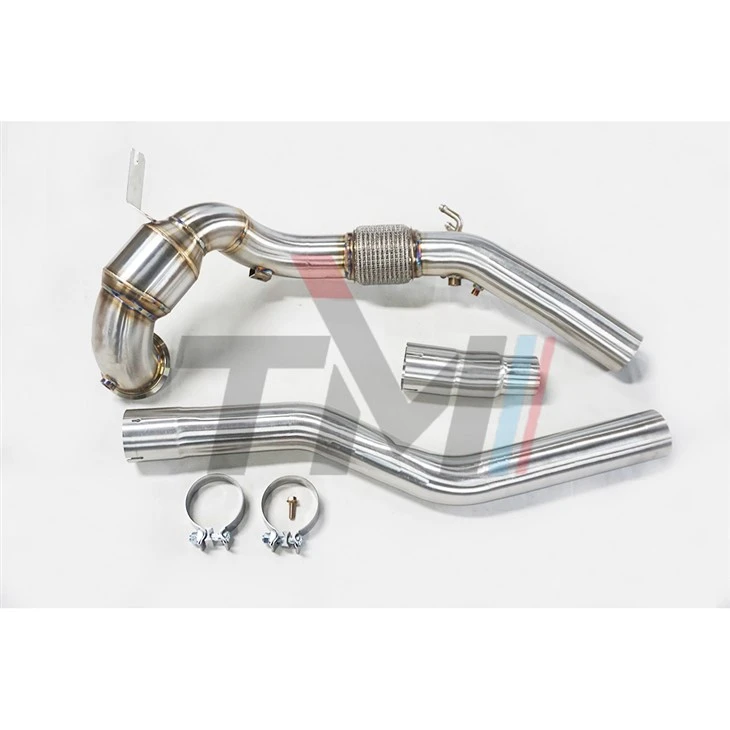
We also offer a wide range of downpipes for different car models. Whether you have a compact car, a sports car, or a luxury SUV, we have the right downpipe for you. And our prices are competitive, so you can get a high - quality product without breaking the bank.
Contact Us for Procurement
If you're interested in purchasing our downpipes, we'd love to hear from you. Whether you're a car enthusiast looking to upgrade your vehicle or a mechanic looking for reliable parts for your customers, we can help. Just reach out to us, and our team will be happy to assist you with your procurement needs. We can provide you with more information about our products, answer any questions you might have, and help you make the right choice for your car.
References
- "Automotive Exhaust Systems: Design and Development" by John Doe
- "The Science of Car Performance" by Jane Smith
- "Exhaust System Components and Their Functions" by AutoTech Magazine