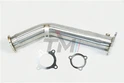
When it comes to enhancing your car's performance, one crucial component that often gets overlooked is the downpipe. As a seasoned car downpipe supplier, I've witnessed firsthand the transformative impact the right downpipe can have on a vehicle. In this blog, I'll delve into the factors to consider when choosing the best downpipe size for your car, providing you with the knowledge to make an informed decision.
Understanding the Role of the Downpipe
Before we discuss the ideal downpipe size, it's essential to understand what a downpipe does. The downpipe is the section of the exhaust system that connects the turbocharger (in turbocharged engines) or the exhaust manifold (in naturally aspirated engines) to the rest of the exhaust system. Its primary function is to carry the exhaust gases from the engine to the catalytic converter and then to the rest of the exhaust system.
A well - designed downpipe can significantly improve exhaust flow, reducing backpressure. Backpressure is the resistance that the exhaust gases encounter as they try to leave the engine. High backpressure can limit the engine's ability to expel exhaust gases efficiently, which in turn can reduce power output, throttle response, and fuel efficiency. By reducing backpressure, a proper downpipe allows the engine to breathe more freely, resulting in increased horsepower and torque.
Factors Affecting Downpipe Size Selection
Engine Displacement
Engine displacement is one of the most critical factors in determining the appropriate downpipe size. Generally, larger engines with greater displacement produce more exhaust gases. For example, a V8 engine with a displacement of 6.2 liters will generate a much larger volume of exhaust gases compared to a 1.6 - liter inline - 4 engine.
For smaller engines, a smaller diameter downpipe, typically around 2.5 inches, may be sufficient. This size allows for adequate exhaust flow without creating too much turbulence. On the other hand, larger engines often require downpipes with diameters of 3 inches or more. A larger diameter downpipe can handle the increased volume of exhaust gases without causing excessive backpressure.
Turbocharger Size
If your car is turbocharged, the size of the turbocharger plays a significant role in downpipe size selection. Larger turbochargers can move more air and fuel into the engine, resulting in a greater volume of exhaust gases. As a result, they typically require larger downpipes to accommodate the increased flow.
For instance, a high - performance turbocharger on a sports car may need a 3 - inch or even 3.5 - inch downpipe to ensure optimal performance. A smaller downpipe in this case could restrict the exhaust flow, causing the turbocharger to work harder and potentially reducing its lifespan. Conversely, a small turbocharger on a daily - driver car may function well with a 2.5 - inch downpipe.
Intended Use of the Vehicle
The way you plan to use your car also influences the downpipe size decision. If you use your car primarily for daily commuting, a smaller downpipe may be a better choice. A smaller downpipe can provide a good balance between performance improvement and noise reduction. It can enhance the engine's performance slightly without making the exhaust too loud, which is ideal for a comfortable driving experience in traffic.
However, if you're into track days or high - performance driving, a larger downpipe is usually recommended. On the track, maximum power and throttle response are crucial. A larger downpipe allows the engine to produce more power by reducing backpressure, which can give you a competitive edge on the track.
Common Downpipe Sizes and Their Applications
2.5 - Inch Downpipe
A 2.5 - inch downpipe is a popular choice for many street - driven cars, especially those with smaller engines or mild turbo setups. It offers a good balance between performance improvement and cost. This size is suitable for cars that are used mainly for daily driving but still want a bit of a performance boost. It can increase horsepower and torque slightly while keeping the exhaust noise at a reasonable level.
3 - Inch Downpipe
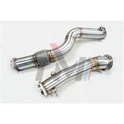
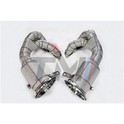
The 3 - inch downpipe is a common choice for high - performance street cars and some track - oriented vehicles. It provides a significant improvement in exhaust flow, allowing the engine to produce more power. This size is well - suited for turbocharged engines with moderate to large turbochargers. It can handle the increased volume of exhaust gases generated by these engines, resulting in better throttle response and increased power output. For example, if you have a S55 Downpipe for a BMW with a high - performance turbo setup, a 3 - inch downpipe can be an excellent option.
3.5 - Inch Downpipe
A 3.5 - inch downpipe is typically used in high - end performance cars and race cars. It offers the maximum exhaust flow, which is essential for engines that produce extremely large volumes of exhaust gases. This size is often paired with large - displacement engines or high - boost turbo setups. However, it can also make the exhaust quite loud, so it may not be suitable for daily driving in some areas.
The Impact of Downpipe Material
In addition to size, the material of the downpipe also affects its performance. Common materials include stainless steel, mild steel, and titanium.
Stainless steel is a popular choice due to its durability and resistance to corrosion. It can withstand high temperatures and harsh environmental conditions, making it suitable for long - term use. Mild steel is more affordable but is more prone to rust and corrosion. Titanium is lightweight and has excellent heat - resistant properties, but it is also the most expensive option.
Complementary Upgrades
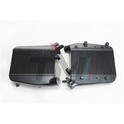
When upgrading your downpipe, it's often beneficial to consider complementary upgrades. For example, if you install a larger downpipe, you may also want to upgrade the M4 Equal Length Mid Pipe to ensure a smooth and consistent exhaust flow throughout the system. Additionally, upgrading the radiators, such as the AMG C63 C63S Radiators, can help manage the increased heat generated by the engine when it is producing more power.
Making the Right Choice
Choosing the best downpipe size for your car requires careful consideration of several factors. It's important to evaluate your engine's specifications, turbocharger size, and intended use of the vehicle. By doing so, you can select a downpipe that will provide the optimal balance of performance, cost, and noise level.
As a car downpipe supplier, I have a wide range of downpipes in different sizes and materials to meet the diverse needs of car enthusiasts. Whether you're looking for a small upgrade for your daily driver or a high - performance downpipe for your track car, I can help you find the right product.
If you're interested in learning more about our downpipes or have any questions about downpipe size selection, I encourage you to reach out. I'm here to assist you in making the best decision for your car and to ensure that you get the most out of your vehicle's performance.


References
- Bosch Automotive Handbook, 7th Edition
- Haynes Manuals for various car models
- SAE International Technical Papers on Exhaust System Design