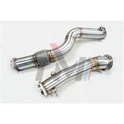
Hey there, fellow car enthusiasts! As a charge pipe supplier, I've been in the thick of the automotive game for quite some time, and one question that keeps popping up is: "Which is better, aluminum or silicone charge pipes?" Well, buckle up, 'cause I'm about to break it down for you.
Aluminum Charge Pipes: The Pros
Let's start with aluminum. Aluminum charge pipes are like the tough guys of the charge pipe world. They're incredibly durable. Aluminum is a strong metal that can withstand a lot of abuse. Whether it's the high pressures generated by your turbocharger or the vibrations and jolts that come with a high - performance ride, aluminum charge pipes are up for the challenge.
One of the big advantages of aluminum is its heat dissipation properties. When your engine is working hard, the air flowing through the charge pipes gets hot. Aluminum helps to cool this air down faster than silicone. Cooler air is denser, which means more oxygen can enter the engine. And as any car buff knows, more oxygen means better combustion and more power. It's like giving your engine a breath of fresh air on a hot day.
Aluminum charge pipes also tend to be more rigid. This rigidity can be a good thing because it helps to maintain a consistent airflow. There's less chance of the pipe collapsing or deforming under pressure, which can lead to a loss of boost and a decrease in performance. Plus, the smooth interior surface of aluminum pipes reduces turbulence, allowing the air to flow more freely.
Another plus is that aluminum charge pipes usually have a sleek, professional look. They can add a touch of style to your engine bay, making it look more like a high - performance machine. If you're into showing off your ride at car meets or just like to open the hood and admire a well - put - together engine, aluminum pipes are a great choice.
Aluminum Charge Pipes: The Cons
However, aluminum isn't all sunshine and rainbows. One of the main drawbacks is cost. Aluminum charge pipes are generally more expensive to manufacture than silicone ones. This means you'll likely have to shell out a bit more cash if you want to upgrade to aluminum.
Installation can also be a bit trickier. Aluminum pipes are less flexible than silicone, so they may require more precise fitting. You might need to make some modifications to your engine bay or use special brackets and clamps to get them in place. This can be a hassle, especially if you're not very handy with tools.
And let's not forget about corrosion. While aluminum is relatively resistant to rust, it can still corrode over time, especially if it's exposed to harsh chemicals or a lot of moisture. You'll need to take good care of your aluminum charge pipes to keep them looking and performing their best.
Silicone Charge Pipes: The Pros
Now, let's talk about silicone charge pipes. Silicone is known for its flexibility. This makes installation a breeze. You can easily bend and maneuver silicone pipes into the right position without having to worry too much about precise fitting. It's like working with a big, squishy tube that can adapt to your engine bay's layout.
Silicone is also great at dampening vibrations. Your engine produces a lot of vibrations during operation, and these vibrations can be transferred to other components, causing wear and tear. Silicone charge pipes act as a buffer, reducing the amount of vibration that reaches other parts of your engine. This can help to extend the lifespan of your engine and its components.
Cost - wise, silicone charge pipes are usually more affordable. If you're on a budget but still want to upgrade your charge pipes, silicone is a great option. You can get a decent set of silicone pipes without breaking the bank.
And silicone comes in a variety of colors. So, if you're looking to add a splash of personality to your engine bay, you can choose from a rainbow of options. Whether you want a bright red pipe to make a statement or a stealthy black one, silicone has you covered.
Silicone Charge Pipes: The Cons
But silicone isn't perfect either. One of the biggest issues is heat resistance. Silicone can't dissipate heat as well as aluminum. As a result, the air flowing through silicone charge pipes can get hotter, which can lead to a decrease in performance. Hotter air is less dense, meaning less oxygen for combustion.
Silicone pipes are also more prone to deformation under high pressure. Over time, the high boost levels generated by your turbocharger can cause the silicone to stretch and lose its shape. This can disrupt the airflow and reduce the efficiency of your engine.
Another concern is durability. While silicone is flexible and can withstand some abuse, it's not as strong as aluminum. It can be more easily damaged by sharp objects or chemicals. If you have a rough - riding vehicle or if you're in an environment where your charge pipes are likely to get banged around, silicone may not be the best choice.
Real - World Applications
So, which one should you choose? Well, it depends on your specific needs and preferences. If you're building a high - performance race car, aluminum charge pipes are probably the way to go. The extra cost and installation hassle are worth it for the improved performance and durability. You'll get better heat dissipation, more consistent airflow, and a more reliable setup that can handle the extreme conditions of racing.


On the other hand, if you're just looking to upgrade your daily driver or if you're on a tight budget, silicone charge pipes are a great option. They're easy to install, affordable, and can still provide a decent performance boost. And if you want to add a bit of color and style to your engine bay, silicone gives you more options.
If you're interested in other high - quality automotive parts, we also offer S5 B9 Downpipe, Nissan RB20 RB25 Manifold, and Mk8 Gti Intercooler. These parts are designed to work in harmony with your charge pipes to enhance your vehicle's performance.
Making the Decision
In the end, the choice between aluminum and silicone charge pipes comes down to what you value most. If performance and durability are your top priorities, go for aluminum. But if ease of installation, cost, and a bit of style are more important to you, silicone might be the better option.
As a charge pipe supplier, I've seen firsthand the benefits of both materials. I'm here to help you make the right decision for your vehicle. Whether you're a weekend warrior on the track or a daily commuter looking for a little extra oomph, we've got the charge pipes to suit your needs.
If you're interested in purchasing charge pipes or have any questions about which type is best for your car, don't hesitate to reach out. We're always happy to chat with you and help you find the perfect solution for your automotive needs. Let's work together to get your engine running at its best!
References
- Smith, J. (2020). "Automotive Charge Pipe Materials: A Comparative Analysis". Journal of Automotive Engineering.
- Johnson, R. (2019). "The Impact of Charge Pipe Material on Engine Performance". Performance Car Magazine.
- Brown, A. (2021). "Choosing the Right Charge Pipe for Your Vehicle". Car Enthusiast's Guide.