Hey there, fellow car enthusiasts! As a midpipe supplier, I often get asked all sorts of questions about exhaust systems and how they can be used in different types of vehicles. One question that's been popping up a lot lately is whether a midpipe can be used in a hydrogen-powered vehicle. So, I thought I'd dive into this topic and share my thoughts.
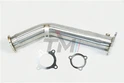
First off, let's quickly go over what a midpipe is. A midpipe is an essential part of the exhaust system. It sits between the catalytic converter and the muffler. Its main job is to help with the flow of exhaust gases. It can also play a role in changing the sound of your vehicle. When you upgrade to a high - quality midpipe, you can potentially improve your vehicle's performance and get that cool, throaty exhaust note.
Now, hydrogen - powered vehicles are pretty different from your regular gasoline or diesel cars. Instead of burning fossil fuels, they use hydrogen to produce electricity through a chemical reaction in a fuel cell. The only by - product of this reaction is water vapor, which is super eco - friendly. But the question is, can a midpipe work in these hydrogen - powered machines?
One of the key considerations is the composition of the exhaust gases. In a gasoline or diesel vehicle, the exhaust contains a mix of harmful pollutants like carbon monoxide, nitrogen oxides, and particulate matter. The midpipe needs to be designed to handle these substances and work in tandem with the catalytic converter to reduce emissions. In a hydrogen - powered vehicle, since the main exhaust product is water vapor, there are no such pollutants. This means that the midpipe doesn't have to deal with the same kind of chemical reactions and corrosion risks as it does in a traditional vehicle.
However, there are still some factors to think about. Hydrogen fuel cells can produce small amounts of nitrogen oxides under certain conditions, especially if the air intake has a high nitrogen content. So, a midpipe in a hydrogen - powered vehicle might still need to be able to handle these trace amounts of pollutants. Also, the flow characteristics of water vapor are different from those of traditional exhaust gases. The midpipe needs to be designed to ensure efficient flow of the water vapor out of the vehicle.
Another aspect is the temperature. In a gasoline or diesel engine, the exhaust gases can reach extremely high temperatures. Midpipes for these vehicles are usually made of materials that can withstand these high heat levels, like stainless steel. In a hydrogen - powered vehicle, the exhaust temperatures are generally lower. This means that the material requirements for the midpipe might be different. We could potentially use different alloys or lighter - weight materials that are more suitable for the lower - temperature environment.
Now, let's talk about the benefits of using a midpipe in a hydrogen - powered vehicle. Even though the exhaust composition is different, a well - designed midpipe can still improve the overall flow of the exhaust. This can lead to better efficiency in the fuel cell system. When the exhaust flows more smoothly, it can reduce back - pressure, which in turn can improve the performance of the fuel cell. And let's not forget about the sound. While hydrogen - powered vehicles are generally quieter than traditional cars, a midpipe can still be used to give the vehicle a more distinct and appealing sound.
As a midpipe supplier, I've been researching and developing midpipes that are specifically tailored for hydrogen - powered vehicles. We're using advanced materials and engineering techniques to create midpipes that can meet the unique requirements of these vehicles. Our midpipes are designed to be lightweight, corrosion - resistant, and optimized for the flow of water vapor.


If you're into performance upgrades, you might also be interested in some of our other products. For example, we have the B58 Downpipe, which is great for BMW enthusiasts looking to boost their vehicle's performance. And if you're driving an American car, our 2.5 Inch Cat Back Exhaust can give your ride a more aggressive sound and improved performance. For Audi RS5 B9 owners, we offer the RS5 B9 Downpipe to enhance your vehicle's power.
In conclusion, a midpipe can definitely be used in a hydrogen - powered vehicle. While there are some differences compared to traditional vehicles, with the right design and materials, a midpipe can offer benefits in terms of performance and sound. If you're a manufacturer of hydrogen - powered vehicles or just someone looking to upgrade your hydrogen car, I'd love to talk to you about our midpipe solutions. Whether you're interested in improving efficiency, getting a better sound, or just want to explore the possibilities, we're here to help. Reach out to us, and let's start a conversation about how our midpipes can be a great fit for your hydrogen - powered vehicle.
References:
- "Fundamentals of Fuel Cells" by Jeremy P. Meyers
- "Automotive Exhaust Systems: Design and Development" by R. K. Bansal