Hey there, fellow car enthusiasts! As a charge pipe supplier, I've spent a ton of time diving into the nitty - gritty of how these components work in different engines. One question that comes up a lot is, "Do charge pipes work differently in diesel engines compared to gasoline engines?" Let's dig in and find out.
First off, let's quickly go over what a charge pipe actually does. In simple terms, a charge pipe is a crucial part of the intake system in turbocharged and supercharged engines. It's responsible for carrying the compressed air from the turbocharger or supercharger to the engine's intake manifold. The compressed air is denser, which means more oxygen can be packed into the combustion chamber, resulting in a more powerful combustion and better engine performance.


How Charge Pipes Work in Gasoline Engines
In gasoline engines, charge pipes play a vital role in improving the overall efficiency and power output. Gasoline engines typically operate at higher RPMs and have a more responsive throttle. The charge pipe needs to be able to handle the rapid fluctuations in air flow that come with these high - speed operations.
When you step on the gas pedal in a gasoline - powered turbo car, the turbocharger spools up quickly. The charge pipe has to be designed to minimize restrictions so that the compressed air can flow smoothly into the engine. A well - designed charge pipe can reduce turbo lag, which is the delay between when you press the accelerator and when the turbocharger starts to provide boost.
For example, in a high - performance sports car like the 718 Cayman Boxster GTS Heat Shield Link Pipes, a high - quality charge pipe can make a significant difference in the car's acceleration and top - end power. These cars are built for speed, and any improvement in the intake system can translate into better lap times and a more exhilarating driving experience.
The material of the charge pipe also matters a lot in gasoline engines. Aluminum is a popular choice because it's lightweight and has good heat dissipation properties. This helps to keep the compressed air cool, which is important since cooler air is denser and contains more oxygen. Some high - end charge pipes are also coated with special materials to further reduce heat transfer and improve air flow.
Charge Pipes in Diesel Engines
Diesel engines have a different set of characteristics compared to gasoline engines, and this affects how charge pipes work in them. Diesel engines are known for their high torque output at low RPMs. They operate on a compression - ignition principle, where the air is compressed to a high pressure and temperature, and then fuel is injected into the combustion chamber.
One of the key differences in diesel engines is the amount of soot and contaminants in the intake air. Diesel engines produce more particulate matter during combustion, and some of this can find its way back into the intake system. Charge pipes in diesel engines need to be more robust and resistant to corrosion and abrasion.
The air flow requirements in diesel engines are also different. Since diesel engines operate at lower RPMs, the air flow is generally more consistent compared to gasoline engines. However, the charge pipe still needs to be able to handle the large volumes of air required for the diesel combustion process.
For heavy - duty diesel trucks, a reliable charge pipe is essential for maintaining engine performance. In a vehicle like a large - scale transport truck, a malfunctioning charge pipe can lead to reduced power, increased fuel consumption, and even engine damage. That's why many diesel charge pipes are made from materials like stainless steel, which can withstand the harsh operating conditions and the presence of contaminants.
Another aspect to consider is the boost pressure in diesel engines. Diesel engines often operate at higher boost pressures compared to gasoline engines. The charge pipe needs to be able to handle these high pressures without leaking or bursting. Reinforced hoses and well - engineered connectors are common features in diesel charge pipes to ensure a secure and leak - free connection.
Comparing the Two
When we compare charge pipes in diesel and gasoline engines, there are several key differences.
Air Flow Characteristics: As mentioned earlier, gasoline engines have more rapid and fluctuating air flow due to their high - RPM operation. Charge pipes in gasoline engines need to be optimized for quick response and minimal restrictions. Diesel engines, on the other hand, have a more consistent air flow at lower RPMs, but they require charge pipes that can handle large volumes of air.
Contaminant Resistance: Diesel engines produce more soot and contaminants, so charge pipes in diesel engines need to be more resistant to corrosion and abrasion. Gasoline engines generally have a cleaner intake environment, so the focus is more on heat management and air flow efficiency.
Boost Pressure: Diesel engines typically operate at higher boost pressures. Charge pipes in diesel engines need to be stronger and more robust to handle these pressures. Gasoline engines may have lower boost pressures in some cases, but the charge pipes still need to be designed to minimize turbo lag.
The Importance of Quality Charge Pipes
Whether you're dealing with a gasoline or diesel engine, using a high - quality charge pipe is crucial. A poorly designed or low - quality charge pipe can lead to a host of problems.
In gasoline engines, a bad charge pipe can cause turbo lag, reduced power output, and increased fuel consumption. In extreme cases, it can even lead to engine misfires and damage to the turbocharger.
In diesel engines, a faulty charge pipe can result in reduced torque, increased emissions, and potential engine failure. The high - pressure and dirty operating environment in diesel engines make it even more important to have a reliable charge pipe.
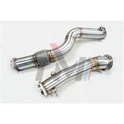
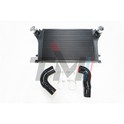
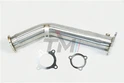
As a charge pipe supplier, I've seen firsthand the difference that a good charge pipe can make. We offer a wide range of charge pipes for different types of engines, including those designed for high - performance gasoline sports cars like the 718 Cayman Boxster GTS Heat Shield Link Pipes and heavy - duty diesel trucks. We also have products like G82 M4 Downpipes and Tail Pipes For Cars to complement the overall exhaust and intake systems.
Why Choose Our Charge Pipes
Our charge pipes are designed and manufactured with the latest technology and high - quality materials. We use advanced engineering techniques to optimize air flow and reduce restrictions. Whether you need a charge pipe for a high - performance gasoline engine or a heavy - duty diesel engine, we've got you covered.
We understand the unique requirements of both diesel and gasoline engines, and our products are tailored to meet those needs. Our team of experts is always available to provide technical support and advice on choosing the right charge pipe for your vehicle.
If you're in the market for a new charge pipe, whether it's for a personal car or a fleet of vehicles, we'd love to hear from you. We're here to help you improve your engine's performance and ensure a smooth and reliable operation. Don't hesitate to reach out to us for more information and to start a procurement discussion.
References
- Heywood, J. B. (1988). Internal Combustion Engine Fundamentals. McGraw - Hill.
- Stone, R. (1999). Introduction to Internal Combustion Engines. Society of Automotive Engineers.
- Crolla, D. A. (2001). Vehicle Dynamics: Theory and Application. CRC Press.