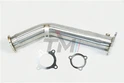
A car mid pipe is a crucial component of a vehicle's exhaust system, connecting the catalytic converter to the rear exhaust section. It plays a significant role in directing exhaust gases, reducing noise, and sometimes even influencing engine performance. As a car mid pipe supplier, I've witnessed firsthand the impact of a malfunctioning mid pipe on a vehicle. In this blog, I'll discuss the signs of a bad car mid pipe, helping you identify potential issues before they escalate.
1. Unusual Noises
One of the most noticeable signs of a bad car mid pipe is the presence of unusual noises. When the mid pipe is in good condition, it helps to muffle the sound of the exhaust gases as they travel through the system. However, if there is a crack, hole, or loose connection in the mid pipe, it can cause the exhaust gases to leak, resulting in a variety of noises.
- Hissing or Whistling Sounds: A hissing or whistling sound is often an indication of a small leak in the mid pipe. This can be caused by a crack or a hole in the pipe, which allows the exhaust gases to escape under pressure. The sound is usually more prominent when the engine is running at higher RPMs or under load.
- Rattling or Clunking Sounds: A rattling or clunking sound can be a sign of a loose or damaged mid pipe. This can occur if the mounting brackets are loose, the pipe is vibrating against other components, or there is a problem with the flex joint. The sound may be more noticeable when driving over bumps or rough roads.
- Loud Exhaust Noise: If the mid pipe is severely damaged or has a large hole, it can cause the exhaust to become extremely loud. This is because the exhaust gases are no longer being properly muffled by the mid pipe, and they are escaping directly into the atmosphere. A loud exhaust noise can also be a sign of a problem with the catalytic converter or the muffler.
2. Decreased Performance
A bad car mid pipe can also have a negative impact on the performance of your vehicle. The mid pipe plays a role in the flow of exhaust gases, and if there is a restriction or a blockage in the pipe, it can cause the engine to work harder and reduce its efficiency.
- Loss of Power: A decrease in power is one of the most common symptoms of a bad mid pipe. This can occur if the pipe is clogged or restricted, which prevents the exhaust gases from flowing freely out of the engine. As a result, the engine may struggle to accelerate, and you may notice a decrease in overall performance.
- Poor Fuel Economy: A bad mid pipe can also cause your vehicle to consume more fuel than usual. This is because the engine has to work harder to overcome the restriction in the exhaust system, which requires more fuel to produce the same amount of power. If you notice a sudden decrease in your fuel economy, it could be a sign of a problem with the mid pipe.
- Check Engine Light: In some cases, a bad mid pipe can trigger the check engine light on your dashboard. This is because the engine control unit (ECU) monitors the performance of the exhaust system, and if it detects a problem with the mid pipe, it will set a diagnostic trouble code (DTC) and illuminate the check engine light. If the check engine light comes on, it's important to have your vehicle inspected by a qualified mechanic as soon as possible.
3. Exhaust Odors
Another sign of a bad car mid pipe is the presence of exhaust odors inside the vehicle. The mid pipe is designed to keep the exhaust gases away from the passenger compartment, but if there is a leak in the pipe, it can allow the gases to enter the vehicle.
- Sulfur or Rotten Egg Smell: A sulfur or rotten egg smell is often an indication of a problem with the catalytic converter. However, it can also be a sign of a leak in the mid pipe, which allows the exhaust gases to come into contact with the oxygen sensor. The oxygen sensor is designed to detect the amount of oxygen in the exhaust gases, and if it is exposed to sulfur or other contaminants, it can cause the sensor to malfunction and produce a false reading.
- Exhaust Fumes: If you notice a strong smell of exhaust fumes inside the vehicle, it could be a sign of a serious leak in the mid pipe. Exhaust fumes contain carbon monoxide, which is a colorless and odorless gas that can be deadly if inhaled in large quantities. If you suspect that there is a leak in the mid pipe, it's important to have your vehicle inspected by a qualified mechanic immediately.
4. Visible Damage
In some cases, you may be able to visually inspect the mid pipe for signs of damage. This can be done by looking under the vehicle or by using a flashlight to examine the pipe.
- Cracks or Holes: Cracks or holes in the mid pipe are a clear sign of damage. These can be caused by corrosion, impact, or normal wear and tear. If you notice any cracks or holes in the mid pipe, it's important to have it replaced as soon as possible to prevent further damage to the exhaust system.
- Rust or Corrosion: Rust or corrosion on the mid pipe can also be a sign of damage. This can occur if the pipe is exposed to moisture or road salt, which can cause the metal to deteriorate over time. If you notice any rust or corrosion on the mid pipe, it's important to have it inspected by a qualified mechanic to determine the extent of the damage.
- Loose or Damaged Mounting Brackets: The mounting brackets are responsible for holding the mid pipe in place, and if they are loose or damaged, it can cause the pipe to vibrate or move. This can lead to further damage to the pipe or other components of the exhaust system. If you notice any loose or damaged mounting brackets, it's important to have them tightened or replaced as soon as possible.
5. Check Engine Light
As mentioned earlier, a bad car mid pipe can trigger the check engine light on your dashboard. The check engine light is a warning system that alerts you to a problem with the engine or the emissions system. When the light comes on, it's important to have your vehicle inspected by a qualified mechanic as soon as possible to determine the cause of the problem.


The check engine light can be triggered by a variety of issues, including a problem with the mid pipe. The engine control unit (ECU) monitors the performance of the exhaust system, and if it detects a problem with the mid pipe, it will set a diagnostic trouble code (DTC) and illuminate the check engine light. The DTC can provide valuable information about the specific problem with the mid pipe, which can help the mechanic to diagnose and repair the issue more quickly.
Conclusion
A bad car mid pipe can cause a variety of problems, including unusual noises, decreased performance, exhaust odors, visible damage, and a check engine light. If you notice any of these signs, it's important to have your vehicle inspected by a qualified mechanic as soon as possible to determine the cause of the problem. As a car mid pipe supplier, I offer a wide range of high-quality mid pipes that are designed to fit your specific vehicle. If you're experiencing any issues with your mid pipe or you're looking to upgrade your exhaust system, 3 Inch Cat Back Exhaust System, C43 C400 C450 Intercooler, G82 M4 Downpipes are some of the products that might interest you.
If you're in the market for a new car mid pipe or have any questions about our products, please don't hesitate to contact us. Our team of experts is here to help you find the right solution for your vehicle and ensure that you get the best performance and reliability.
References
- "Automotive Exhaust Systems: Design, Performance, and Emissions Control" by David Crolla
- "The Automotive Handbook" by Bosch
- Various automotive repair manuals and technical resources