Hey there, car enthusiasts! I'm a supplier of cat back exhaust systems, and I'm stoked to chat with you about how these bad boys can affect your car's torque.
First off, let's break down what a cat back exhaust is. The "cat" in cat back stands for catalytic converter. A cat back exhaust system starts from the back end of the catalytic converter and includes the muffler, pipes, and sometimes a resonator. It's a popular upgrade for car owners looking to improve their vehicle's performance, sound, and looks.
So, how does a cat back exhaust impact torque? Torque is the rotational force that gets your car moving and helps it accelerate. It's what gives you that push in the back when you step on the gas. A well - designed cat back exhaust can have a significant positive effect on torque.
One of the main ways a cat back exhaust affects torque is by improving exhaust flow. Stock exhaust systems are often restrictive. Automakers design them to meet emissions standards and keep noise levels down. But these restrictions can limit the engine's ability to expel exhaust gases efficiently. When the exhaust flow is restricted, the engine has to work harder to push out the spent gases. This creates backpressure, which can reduce torque.
A cat back exhaust, on the other hand, usually has larger diameter pipes and less restrictive mufflers. This allows the exhaust gases to flow more freely. With better exhaust flow, the engine can breathe easier. As the engine can expel exhaust gases more quickly, it can take in more fresh air - fuel mixture on the intake stroke. This results in more efficient combustion, which in turn increases torque.
Another factor is the design of the muffler. Some cat back exhausts use high - performance mufflers that are designed to balance noise reduction and exhaust flow. For example, chambered mufflers use internal chambers to reflect and cancel out sound waves, while still allowing exhaust gases to pass through with minimal restriction. This type of muffler can help maintain or increase torque while giving your car a nice, aggressive sound.
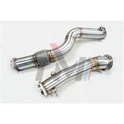
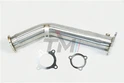
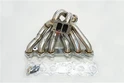
Now, let's talk about different types of cars and how a cat back exhaust can affect their torque. For turbocharged cars, a cat back exhaust can be a game - changer. Turbochargers rely on exhaust gases to spin the turbine, which compresses the incoming air. With a more efficient cat back exhaust, the turbocharger can spool up faster. This means that the engine can generate boost earlier in the RPM range, resulting in a significant increase in torque. For instance, if you have a G80 M3 Downpipe, pairing it with a high - quality cat back exhaust can further enhance the turbocharger's performance and boost torque across the rev range.
Naturally aspirated engines can also benefit from a cat back exhaust. These engines rely on the natural pressure difference between the intake and exhaust to draw in air and expel gases. A cat back exhaust reduces backpressure, allowing the engine to expel exhaust gases more effectively. This improves the engine's volumetric efficiency, which is the ratio of the amount of air - fuel mixture the engine can actually intake to the theoretical maximum amount. With better volumetric efficiency, the engine can produce more power and torque.
Some people might be worried about emissions when upgrading to a cat back exhaust. However, most modern cat back exhaust systems are designed to work with the existing catalytic converter. The catalytic converter is still responsible for reducing harmful emissions, and the cat back exhaust just helps the gases flow through it more smoothly. So, in most cases, you can enjoy the performance benefits without sacrificing environmental friendliness.
There are also some other aspects to consider when it comes to the impact of a cat back exhaust on torque. The length and diameter of the exhaust pipes play a crucial role. Longer pipes can help to scavenge exhaust gases at lower RPMs, which can increase low - end torque. On the other hand, shorter pipes can be better for high - RPM performance. A good cat back exhaust system is often tuned to balance these factors based on the specific characteristics of the engine.


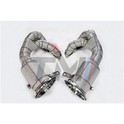
Let's take a look at some real - world examples. Suppose you have a Mercedes - Benz G63. Upgrading to a G63 W463 Heat Shield Downpipes and then adding a cat back exhaust can transform the driving experience. The combination of these upgrades can improve exhaust flow, reduce backpressure, and boost torque. This means quicker acceleration, better passing power, and an overall more responsive engine.
If you own a BMW and are looking for a mid - pipe upgrade, a Catless Mid Pipe can be a great addition to your cat back exhaust system. The catless mid - pipe further reduces restrictions in the exhaust system, working in harmony with the cat back exhaust to increase torque and power.
Now, I know some of you might be thinking, "Does adding a cat back exhaust always increase torque?" Well, not necessarily. The effectiveness of a cat back exhaust in increasing torque depends on several factors, such as the engine's design, the existing exhaust system, and the quality of the cat back exhaust itself. In some cases, if the stock exhaust system is already relatively unrestricted, the increase in torque might be less noticeable. Also, if the cat back exhaust is not properly tuned to the engine, it could potentially cause a decrease in torque in certain RPM ranges.
So, how do you make sure you're getting the most out of a cat back exhaust? First, do your research. Look for reputable brands that have a proven track record of performance. Read reviews from other car owners who have installed the same exhaust system on their vehicles. Make sure the exhaust is specifically designed for your make and model of car. This ensures that it will fit properly and work with the engine's existing components.
If you're not comfortable installing the cat back exhaust yourself, it's a good idea to have it installed by a professional. A professional installer can ensure that the exhaust is properly aligned, the connections are tight, and the system is working as it should. They can also make any necessary adjustments to optimize the performance.
In conclusion, a cat back exhaust can have a significant impact on your car's torque. By improving exhaust flow, reducing backpressure, and working in harmony with the engine, it can increase power and performance. Whether you have a turbocharged or naturally aspirated engine, a well - chosen cat back exhaust can enhance your driving experience.
If you're interested in upgrading your car with a high - quality cat back exhaust system, I'd love to chat with you. Whether you have questions about compatibility, performance, or pricing, I'm here to help. Reach out to me, and let's start a conversation about how we can boost your car's torque and take your driving to the next level.
References
- "Automotive Exhaust Systems: Fundamentals, Theory, and Design" by David Crolla
- Various automotive enthusiast forums and blogs for real - world user experiences and insights.