A catback exhaust system is a popular aftermarket upgrade for many car enthusiasts, and when it comes to the Golf 7, it can bring about significant changes to the vehicle's performance, particularly the torque curve. As a supplier of catback exhaust systems for the Golf 7, I have witnessed firsthand the impact these modifications can have on the driving experience. In this blog, we'll delve into the science behind how a catback exhaust changes the torque curve on the Golf 7.
Understanding the Basics of Torque and Exhaust Systems
Before we explore the effects of a catback exhaust on the Golf 7's torque curve, it's essential to understand what torque is and how an exhaust system functions. Torque is the rotational force produced by the engine, which is responsible for accelerating the vehicle. It is a crucial factor in determining a car's performance, especially in terms of off - the - line acceleration and mid - range power.


The exhaust system plays a vital role in the engine's operation. Its primary function is to expel the exhaust gases produced during the combustion process. A stock exhaust system is designed to meet various requirements, including noise regulations, emissions standards, and cost - effectiveness. However, these design constraints often result in a system that may not be optimized for maximum performance.
What is a Catback Exhaust?
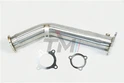
A catback exhaust system is a type of aftermarket exhaust upgrade that replaces the exhaust components from the catalytic converter to the rear of the vehicle. It typically includes a mid - pipe, a muffler, and tailpipes. By replacing these components, a catback exhaust can offer several benefits, such as improved exhaust flow, reduced backpressure, and a more aggressive exhaust note.
How a Catback Exhaust Affects the Torque Curve on the Golf 7
1. Reduced Backpressure
One of the primary ways a catback exhaust changes the torque curve on the Golf 7 is by reducing backpressure. Backpressure is the resistance that the exhaust gases encounter as they flow through the exhaust system. In a stock exhaust system, the restrictive design can cause increased backpressure, which can impede the engine's ability to expel exhaust gases efficiently.
When a catback exhaust is installed, the larger diameter pipes and less restrictive mufflers allow the exhaust gases to flow more freely. This reduction in backpressure means that the engine doesn't have to work as hard to push the exhaust gases out. As a result, the engine can breathe better, which can lead to an increase in torque, especially in the mid - range RPMs.
For example, at around 2000 - 4000 RPMs, the Golf 7 may experience a more significant increase in torque with a catback exhaust. This is because, in this RPM range, the engine is producing a large amount of exhaust gases, and the reduced backpressure allows these gases to be expelled more quickly, enabling the engine to generate more power.
2. Improved Exhaust Scavenging
Exhaust scavenging is the process by which the exhaust gases are removed from the combustion chamber. A well - designed catback exhaust system can improve exhaust scavenging in the Golf 7. When the exhaust gases are expelled more efficiently, it creates a negative pressure wave that helps to draw in the fresh air - fuel mixture during the intake stroke.
This improved scavenging effect can enhance the combustion process, leading to more complete combustion and increased power output. On the torque curve, this can be seen as an increase in torque across a wider RPM range. The Golf 7 may experience a flatter and more consistent torque curve, which means that there is more power available at different engine speeds.
3. Tuning and Optimization
In addition to the physical changes in the exhaust system, a catback exhaust can also be tuned to optimize the torque curve. Some catback exhaust systems come with adjustable mufflers or resonators, which allow the driver to fine - tune the exhaust flow and sound. By adjusting these components, it is possible to optimize the torque curve for specific driving conditions or performance goals.
For instance, if the driver wants more low - end torque for city driving, the exhaust system can be tuned to provide a more restrictive flow at lower RPMs, which can increase the pressure in the combustion chamber and improve torque output. On the other hand, for high - speed highway driving, the system can be adjusted to provide a more free - flowing exhaust, which can enhance mid - range and high - end power.
Real - World Examples and Comparisons
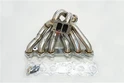
To better understand the impact of a catback exhaust on the Golf 7's torque curve, let's compare it with other vehicles and exhaust upgrades. For example, the Toyota Supra 2JZ - GTE Manifold is a well - known aftermarket upgrade for the Toyota Supra. Similar to a catback exhaust on the Golf 7, this manifold is designed to improve exhaust flow and increase power. However, the 2JZ - GTE engine has different characteristics compared to the Golf 7's engine, so the torque curve changes will be different.
Another example is the AMG C63 W204 Headers. Headers are another type of exhaust upgrade that can have a significant impact on an engine's performance. While headers typically replace the exhaust manifold closer to the engine, a catback exhaust focuses on the components downstream of the catalytic converter. Both upgrades aim to improve exhaust flow, but they target different parts of the exhaust system.
The Aventador S LP740 - 4 Downpipes are also an interesting comparison. Downpipes are an important part of the exhaust system, especially for high - performance vehicles. They connect the turbocharger or exhaust manifold to the rest of the exhaust system. A catback exhaust on the Golf 7 may not have the same level of performance impact as a downpipe upgrade on a high - end supercar like the Aventador S, but it can still offer significant improvements for a compact hatchback.
Benefits of a Changed Torque Curve on the Golf 7
1. Improved Acceleration
With an improved torque curve, the Golf 7 can experience better acceleration. The increased torque in the mid - range RPMs means that the vehicle can accelerate more quickly from a standstill and during overtaking maneuvers. This can make the driving experience more engaging and enjoyable, especially for those who appreciate a bit of sportiness in their daily commute.
2. Enhanced Fuel Efficiency
Contrary to what some may think, a catback exhaust can also have a positive impact on fuel efficiency. When the engine can operate more efficiently due to reduced backpressure and improved scavenging, it may require less fuel to produce the same amount of power. This can result in better fuel economy, especially during normal driving conditions.
3. Customization and Personalization
A catback exhaust also allows Golf 7 owners to customize their vehicles. The different exhaust notes available, from a subtle growl to a loud and aggressive roar, can give the car a unique personality. Additionally, the visual appeal of aftermarket tailpipes can enhance the vehicle's overall appearance.
Conclusion
In conclusion, a catback exhaust can have a significant impact on the torque curve of the Golf 7. By reducing backpressure, improving exhaust scavenging, and allowing for tuning and optimization, it can enhance the vehicle's performance in terms of torque, acceleration, and fuel efficiency.
If you're a Golf 7 owner looking to upgrade your vehicle's performance and experience the benefits of a changed torque curve, our catback exhaust systems are an excellent choice. We offer a range of high - quality, performance - oriented catback exhausts that are specifically designed for the Golf 7. Contact us for more information and to discuss your purchasing options. We're always happy to assist you in finding the perfect exhaust system for your needs.
References
- "Automotive Engine Performance" by James D. Halderman
- "Exhaust Systems: Theory and Design" by Klaus Heisler
- Various automotive engineering research papers on exhaust system design and performance.