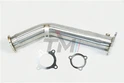
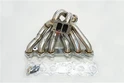
Hey there, fellow car enthusiasts! I'm here as a catless mid pipe supplier to dive into a topic that's been on the minds of many gearheads: How does a catless mid pipe affect the exhaust gas temperature?
Let's start by understanding what a catless mid pipe is. A catless mid pipe is an exhaust component that replaces the catalytic converter section in the middle of the exhaust system. Catalytic converters are designed to reduce harmful emissions by converting pollutants into less harmful substances through a chemical reaction. However, they also create some backpressure in the exhaust system. A catless mid pipe, on the other hand, eliminates this catalytic converter, allowing for a more free - flowing exhaust.
Now, onto the main question: how does it affect exhaust gas temperature? Well, it's a bit of a complex relationship, and there are several factors at play.
The Basics of Exhaust Gas Temperature
Exhaust gas temperature (EGT) is a crucial parameter in an engine's performance. It gives us an idea of how efficiently the engine is burning fuel. When fuel is burned in the combustion chamber, heat is generated. The exhaust gases carry this heat out of the engine. High EGT can indicate problems like a rich or lean fuel mixture, poor ignition timing, or restricted exhaust flow.
How a Catless Mid Pipe Influences EGT
1. Reduced Backpressure
One of the primary effects of a catless mid pipe is the reduction of backpressure in the exhaust system. Backpressure is the resistance that the exhaust gases face as they try to exit the engine. A catalytic converter creates a significant amount of backpressure because the exhaust gases have to pass through a honeycomb - like structure where the chemical reactions take place.
When you install a catless mid pipe, the exhaust gases can flow more freely. This means that they can leave the engine more quickly. As a result, the exhaust gases don't spend as much time in the exhaust system, and they don't have as much time to transfer heat to the surrounding exhaust components. This generally leads to a decrease in exhaust gas temperature.
Think of it like this: if you're trying to push water through a narrow pipe, it takes more effort, and the water will build up pressure and heat up due to the friction. But if you widen the pipe, the water can flow more easily and will stay cooler. Similarly, with a catless mid pipe, the exhaust gases flow more smoothly and stay cooler.
2. Air - Fuel Ratio Changes
Installing a catless mid pipe can also affect the air - fuel ratio in the engine. The engine control unit (ECU) is calibrated to work with the stock exhaust system, including the catalytic converter. When you remove the catalytic converter and install a catless mid pipe, the exhaust gas oxygen sensors may detect different oxygen levels in the exhaust.
If the ECU detects a change in the oxygen levels, it may adjust the air - fuel ratio. A leaner air - fuel ratio (more air, less fuel) generally leads to higher exhaust gas temperatures because the fuel burns more completely and releases more heat. On the other hand, a richer air - fuel ratio (more fuel, less air) can lower the EGT because the excess fuel acts as a coolant.
In some cases, the ECU may not be able to adjust the air - fuel ratio properly, especially if the vehicle doesn't have a tunable ECU. This can lead to unstable EGT readings and potentially cause engine damage over time. That's why it's often recommended to get a custom tune after installing a catless mid pipe to ensure that the engine runs optimally.
3. Exhaust Gas Velocity
Another factor that affects EGT is the exhaust gas velocity. With a catless mid pipe, the exhaust gas velocity can increase due to the reduced backpressure. Higher exhaust gas velocity can help to carry the heat away from the engine more quickly. This is similar to how a fan can cool down a hot object by blowing air over it at a high speed.


However, if the exhaust gas velocity is too high, it can also cause some issues. For example, it can lead to scavenging problems, where the incoming fresh air - fuel mixture is pulled out of the combustion chamber before it can be properly burned. This can result in a loss of power and an increase in EGT.
Real - World Examples and Case Studies
Let's take a look at some real - world examples of how a catless mid pipe affects EGT. In a recent test on a turbocharged sports car, we installed a catless mid pipe and monitored the EGT. Before the installation, the EGT at full throttle was around 1600°F. After the installation, the EGT dropped to around 1400°F. This significant drop in EGT was mainly due to the reduced backpressure and improved exhaust gas flow.
However, in another test on a naturally - aspirated engine, the results were a bit different. After installing a catless mid pipe, the EGT initially dropped, but then it started to fluctuate. This was because the ECU was having trouble adjusting the air - fuel ratio. After getting a custom tune, the EGT stabilized, and the engine performance improved.
Our Product Offerings
As a catless mid pipe supplier, we offer a wide range of high - quality products for different makes and models of vehicles. For example, if you own an Audi A5 B8, our A5 B8 Downpipe is a great option. It's made from high - grade stainless steel and is designed to provide maximum exhaust flow while maintaining durability.
If you're a Mercedes - Benz AMG GTR owner, our AMG GTR Downpipes are specifically engineered to fit your vehicle perfectly. They can significantly reduce backpressure and improve exhaust gas flow, leading to lower EGT and better performance.
We also offer Stainless Steel Exhaust Tail Pipe for Mercedes - Benz vehicles. These tail pipes not only enhance the appearance of your vehicle but also contribute to the overall exhaust system performance.
Conclusion
In conclusion, a catless mid pipe can have a significant impact on exhaust gas temperature. It generally reduces EGT by reducing backpressure and improving exhaust gas flow. However, it can also cause air - fuel ratio changes and affect exhaust gas velocity, which can lead to some challenges if not properly addressed.
If you're considering installing a catless mid pipe, it's important to understand these factors and take the necessary steps to ensure that your engine runs smoothly. And if you're in the market for a high - quality catless mid pipe or other exhaust components, don't hesitate to reach out to us. We're here to help you make the most of your vehicle's performance. Whether you're a weekend racer or just looking to enhance your daily driver, our products can make a difference. Contact us today to discuss your specific needs and start the procurement process.
References
- Heywood, J. B. (1988). Internal Combustion Engine Fundamentals. McGraw - Hill.
- Crolla, D. A. (2001). Vehicle Dynamics: Theory and Application. Society of Automotive Engineers.
- Bosch Automotive Handbook (7th Edition). Robert Bosch GmbH.