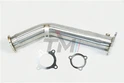
As a seasoned supplier of exhaust systems, I've witnessed firsthand the profound influence that the length of an exhaust pipe can have on a vehicle's performance. In the automotive world, every component plays a crucial role, and the exhaust system is no exception. The exhaust pipe, in particular, is a key player in determining how well an engine runs, and its length can significantly affect various aspects of performance.
The Basics of Exhaust Systems
Before delving into the impact of exhaust pipe length, it's essential to understand the basic function of an exhaust system. The primary purpose of an exhaust system is to remove the harmful gases produced during the combustion process from the engine and expel them safely out of the vehicle. This process involves several components, including the exhaust manifold, catalytic converter, muffler, and, of course, the exhaust pipe.
The exhaust pipe serves as the conduit through which the exhaust gases travel from the engine to the rear of the vehicle. Along the way, the exhaust gases pass through the catalytic converter, which helps to reduce harmful emissions, and the muffler, which helps to reduce noise. The length of the exhaust pipe can affect how efficiently these components work and how well the engine performs.
Impact on Exhaust Gas Flow
One of the most significant ways in which the length of an exhaust pipe impacts performance is by affecting the flow of exhaust gases. The exhaust gases produced by the engine need to be expelled quickly and efficiently to ensure that the engine can continue to run smoothly. A shorter exhaust pipe generally allows for a more direct and unobstructed flow of exhaust gases, which can improve the engine's ability to "breathe."
When the exhaust gases can flow more freely, the engine can expel the spent gases more quickly, which in turn allows it to take in fresh air and fuel more efficiently. This can lead to increased power and torque, as well as improved fuel efficiency. On the other hand, a longer exhaust pipe can create more resistance to the flow of exhaust gases, which can slow down the expulsion of the gases and reduce the engine's performance.
However, it's important to note that the relationship between exhaust pipe length and gas flow is not always straightforward. In some cases, a longer exhaust pipe can actually help to improve the scavenging effect, which is the process by which the exhaust gases are removed from the combustion chamber. The scavenging effect can help to draw in more fresh air and fuel, which can increase power and efficiency. This is particularly true in engines with a high level of exhaust gas velocity, such as high-performance engines.
Impact on Backpressure
Another important factor to consider when discussing the impact of exhaust pipe length on performance is backpressure. Backpressure is the resistance that the exhaust gases encounter as they flow through the exhaust system. A certain amount of backpressure is necessary for the proper operation of the engine, as it helps to maintain the correct air-fuel ratio and ensures that the exhaust gases are expelled in a controlled manner.
A shorter exhaust pipe generally results in lower backpressure, as there is less distance for the exhaust gases to travel and fewer bends and restrictions. This can be beneficial for high-performance engines, which require a lower backpressure to operate at their best. However, too little backpressure can also cause problems, such as a loss of low-end torque and poor fuel economy.
On the other hand, a longer exhaust pipe can increase backpressure, which can be beneficial for engines that require a higher backpressure to operate efficiently. For example, some diesel engines and low-revving engines rely on a certain amount of backpressure to maintain the correct air-fuel ratio and to ensure that the exhaust gases are expelled in a controlled manner. However, too much backpressure can also cause problems, such as reduced power and efficiency.
Impact on Sound
In addition to its impact on performance, the length of an exhaust pipe can also affect the sound of the vehicle. A shorter exhaust pipe generally produces a louder and more aggressive sound, as the exhaust gases are expelled more quickly and with less restriction. This can be desirable for some drivers, who want their vehicle to have a sporty or high-performance sound.
On the other hand, a longer exhaust pipe can produce a quieter and more subdued sound, as the exhaust gases have more time to dissipate and the sound waves have more distance to travel. This can be desirable for some drivers, who want their vehicle to have a more refined or luxurious sound.
Considerations for Different Types of Vehicles
The impact of exhaust pipe length on performance can vary depending on the type of vehicle. For example, high-performance vehicles, such as sports cars and race cars, generally require a shorter exhaust pipe to maximize power and performance. These vehicles typically have high-revving engines that produce a large amount of exhaust gas, and a shorter exhaust pipe can help to ensure that the exhaust gases are expelled quickly and efficiently.


On the other hand, vehicles that are designed for fuel efficiency, such as hybrid cars and economy cars, generally require a longer exhaust pipe to maximize fuel economy. These vehicles typically have low-revving engines that produce a smaller amount of exhaust gas, and a longer exhaust pipe can help to maintain the correct backpressure and ensure that the exhaust gases are expelled in a controlled manner.
Our Exhaust System Solutions
As an exhaust system supplier, we understand the importance of finding the right balance between exhaust pipe length and performance. That's why we offer a wide range of exhaust systems that are designed to meet the specific needs of different types of vehicles. Whether you're looking for a high-performance exhaust system for your sports car or a fuel-efficient exhaust system for your economy car, we have the solution for you.
In addition to our standard exhaust systems, we also offer custom exhaust systems that can be tailored to your specific requirements. Our team of experienced engineers and technicians can work with you to design and build an exhaust system that is optimized for your vehicle's performance and sound.
If you're interested in learning more about our exhaust systems or the impact of exhaust pipe length on performance, please visit our website at [Your Website URL]. You can also browse our selection of related products, such as the E43 E400 E450 Intercooler, the 2JZGTE Intake Manifold, and the Tail Pipes For Cars.
Contact Us for Procurement
We invite you to reach out to us for any procurement inquiries. Our dedicated team is ready to assist you in finding the perfect exhaust system for your needs. Whether you're an automotive enthusiast looking to upgrade your vehicle or a business in need of bulk orders, we're here to provide you with top-quality products and excellent customer service.
References
- "Automotive Exhaust Systems: Design and Development" by Klaus Hein.
- "Vehicle Powertrain Systems: Introduction to Modeling and Optimization" by Antoni Sobiesiak.
- "The SAE Handbook of Automotive Control Systems" edited by Paul H. Gill.