Turbo lag refers to the delay between the moment a driver presses the accelerator pedal and the moment the turbocharger delivers the desired boost pressure. This phenomenon can be a significant drawback, especially in high - performance driving situations where immediate power delivery is crucial. The N20 intercooler, as a key component in turbocharged engines, plays a vital role in influencing turbo lag. In this blog, as an N20 intercooler supplier, I will explore how the N20 intercooler affects turbo lag from multiple perspectives.
The Basic Principle of Turbo Lag and the Role of Intercoolers
To understand how the N20 intercooler affects turbo lag, we first need to understand the basic principle of turbo lag. A turbocharger is driven by exhaust gases from the engine. When the driver presses the accelerator, the exhaust gas volume increases, which drives the turbine of the turbocharger to spin. As the turbine spins, it compresses the intake air, increasing the air density and allowing more fuel to be burned, thereby increasing engine power.
However, there is a time delay in this process. The turbocharger needs time to spool up, that is, to reach the speed required to generate sufficient boost pressure. During this time, the engine does not receive the expected increase in air supply, resulting in a power deficit, which is turbo lag.
An intercooler, on the other hand, is designed to cool the compressed air coming from the turbocharger. When the turbocharger compresses the air, the air temperature rises significantly. Hot air is less dense than cold air, which means that for a given volume, hot air contains fewer oxygen molecules. By cooling the compressed air, the intercooler increases its density, allowing more oxygen to enter the engine cylinders. This enables the engine to burn more fuel and produce more power.
How the N20 Intercooler Reduces Turbo Lag
Improved Air Density and Combustion Efficiency
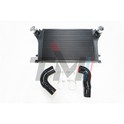
The N20 intercooler is specifically designed for the BMW N20 engine. By effectively cooling the compressed air, it increases the air density. When the turbocharger starts to spool up and deliver compressed air, the N20 intercooler quickly cools this air. The denser, cooler air provides more oxygen for combustion, which means that the engine can generate more power with the same amount of fuel.
This improved combustion efficiency helps to reduce the perceived turbo lag. Since the engine can produce more power more quickly with the denser air, the delay between pressing the accelerator and feeling the power boost is reduced. For example, in a situation where a driver needs to overtake another vehicle on the highway, the N20 intercooler - equipped engine can respond more quickly, providing the necessary power to complete the overtaking maneuver smoothly.
Reduced Heat Soak
Heat soak is another factor that can exacerbate turbo lag. When the engine is under heavy load or has been running for a long time, the turbocharger and the intake air can become extremely hot. This hot air not only reduces air density but also can cause the turbocharger to work less efficiently.
The N20 intercooler is designed to have a large surface area and efficient cooling fins, which help to dissipate heat quickly. By reducing heat soak, the intercooler ensures that the turbocharger can operate at optimal efficiency. For instance, in stop - and - go traffic, where the engine is constantly starting and stopping, the N20 intercooler can prevent the intake air from overheating, allowing the turbocharger to spool up more quickly when the driver needs to accelerate again.
Optimized Flow Design
The design of the N20 intercooler also plays a crucial role in reducing turbo lag. A well - designed intercooler has a smooth internal flow path, which minimizes the pressure drop of the intake air. When the pressure drop is low, the turbocharger does not have to work as hard to push the air through the intercooler.
This means that the turbocharger can reach its optimal speed more quickly, reducing the spool - up time. Our N20 intercoolers are engineered with advanced flow simulation techniques to ensure that the air can flow through the intercooler with minimal resistance. This optimized flow design directly contributes to a reduction in turbo lag.
Comparison with Other Related Components
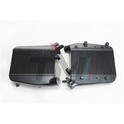
Compared to the 911 Turbo Intercooler
The 911 Turbo Intercooler is designed for the Porsche 911 Turbo engine. While both the N20 intercooler and the 911 Turbo Intercooler serve the same basic function of cooling the compressed air, they are tailored to different engines with different characteristics.
The N20 intercooler is optimized for the BMW N20 engine, which has a different power output, displacement, and turbocharger configuration compared to the Porsche 911 Turbo. The N20 intercooler's design takes into account the specific requirements of the N20 engine, such as its torque curve and power delivery characteristics, to provide the most effective reduction in turbo lag for this particular engine.
Role of B58 Downpipe in Conjunction with the N20 Intercooler
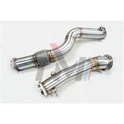
The B58 Downpipe is another important component in a turbocharged engine system. While the N20 intercooler focuses on cooling the intake air, the B58 downpipe is responsible for improving the exhaust gas flow.
A high - performance B58 downpipe can reduce the back - pressure in the exhaust system, allowing the turbocharger to spin more freely. When used in conjunction with the N20 intercooler, the improved exhaust flow can help the turbocharger spool up more quickly, which further reduces turbo lag. The combination of a well - designed N20 intercooler and a high - performance B58 downpipe can significantly enhance the overall performance of the engine.
BMW S50 S52 Manifold and Turbo Lag
The BMW S50 S52 Manifold is related to the intake and exhaust gas distribution in the engine. A well - designed manifold can ensure that the air and exhaust gases are evenly distributed among the cylinders, which is crucial for engine performance.
In the context of turbo lag, a high - quality BMW S50 S52 manifold can work in harmony with the N20 intercooler. By providing a more uniform intake and exhaust flow, the manifold helps the turbocharger to operate more efficiently. When combined with the cooling effect of the N20 intercooler, the overall turbo lag of the engine can be further reduced.
The Impact of Upgrading the N20 Intercooler
Upgrading to a high - performance N20 intercooler can have several benefits in terms of reducing turbo lag. Firstly, a larger and more efficient intercooler can provide better cooling performance. This means that the compressed air can be cooled to a lower temperature, resulting in higher air density and more power.


Secondly, an upgraded N20 intercooler often has a more advanced design, such as better - shaped cooling fins and a more optimized internal flow path. These design improvements can further reduce the pressure drop and improve the overall efficiency of the intercooler.
For example, many of our customers who have upgraded their N20 intercoolers have reported a significant reduction in turbo lag. They notice that the engine responds more quickly to throttle inputs, and there is a more immediate increase in power when accelerating.
Encouraging Contact for Purchase and洽谈
If you are looking to reduce turbo lag in your BMW N20 engine and improve its overall performance, our N20 intercoolers are the ideal solution. Our intercoolers are designed and manufactured with the highest quality standards, using advanced materials and cutting - edge technology.
We are committed to providing our customers with the best products and services. Whether you are a car enthusiast looking to enhance the performance of your daily driver or a professional racer in need of a high - performance intercooler, we have the right solution for you.
Contact us today to discuss your specific requirements and learn more about how our N20 intercoolers can benefit your engine. We look forward to working with you to achieve optimal engine performance.
References
- Heywood, J. B. (1988). Internal Combustion Engine Fundamentals. McGraw - Hill.
- Crolla, D. A. (2001). The Automotive Chassis: Engineering Principles. Society of Automotive Engineers.
- Taylor, C. F. (1985). The Internal Combustion Engine in Theory and Practice. MIT Press.